

 English
 Español
The vital function of the engine oil cooler hose assembly
Content
In the high-temperature environment of a modern internal combustion engine, oil serves as more than just a lubricant; It is a critical cooling medium. the Automotive Engine Oil Cooler Hose Assembly It acts as a dedicated gateway, transporting hot engine oil from the block to an external cooler and returning it to an optimal temperature. Without this continuous circulation, oil viscosity decreases rapidly, causing increased friction and possible catastrophic engine seizure.
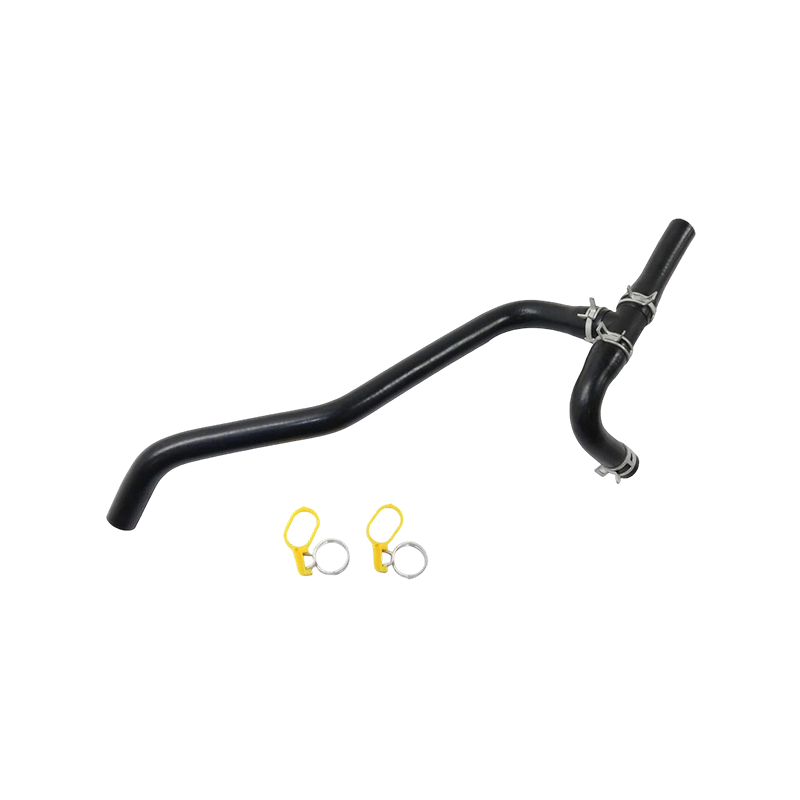
Modern turbocharged, high-compression engines generate localized heat far beyond the capacity of traditional radiators alone. A robust hose assembly is designed to withstand pressures up to 150 psi and constant thermal cycles. By maintaining the oil temperature within the 80°C to 105°C In this range, these assemblies ensure that the oil maintains the resistance of its protective film, extending the life of the crankshaft bearings and camshafts.
Advanced materials engineering: synthetic rubber and precision crimping
The integrity of an oil cooler hose assembly depends on its ability to resist "oil permeation," a process in which oil molecules gradually break down rubber from the inside out. Premium builds use AEM (acrylic ethylene elastomer) or CSM (chlorosulfonated polyethylene) rubber compounds. These materials are specifically chosen for their exceptional resistance to oxidized lubricants and high temperature environments.
The Importance of 360 Degree Cold Crimping Technology
The most common point of failure in an oil cooler line is the junction between the flexible hose and the rigid metal connector. High-quality assemblies employ 360 degree automated cold pressing . This process applies uniform pressure around the collar, ensuring a tight seal that can survive the constant "hammering" effect of oil pressure pulses during cold starts.
| Technical specification | Premium AEM Assembly | Standard Nitrile Hose |
|---|---|---|
| Maximum temperature rating | Up to 175°C | Up to 125°C |
| Ozone/climate resistance | Excellent (anti-crack) | Moderate (prone to dry rot) |
| Reinforcement layer | High tenacity Aramid/Polyester | single layer rayon |
Early detection of warning signs of hose degradation
Unlike a coolant leak, which often produces steam and a sweet smell, engine oil leaks can be subtle until they reach a critical stage. Monitoring the condition of the hose assembly is a key part of vehicle preventative maintenance.
- "Sweating" in the Crimps: Dark, wet spots around the metal collars indicate that the internal seal is beginning to cry under pressure.
- Surface hardening: If the rubber feels brittle or "plastic-like" when squeezed, it has lost its elasticity and is prone to breaking with engine vibration.
- Oil pressure fluctuations: Collapsed internal liners can restrict flow and cause erratic readings on the oil pressure gauge.
- Abrasive wear: Incorrectly positioned hoses can rub against the chassis, wearing away the reinforcement layer and creating a high-risk explosion point.
Precision installation and routing for greater longevity
Proper installation of an automotive engine oil cooler hose assembly is as important as the quality of the part itself. When installing a new assembly, technicians must ensure that the hose is not under "torsional tension," meaning that the hose should not twist during tightening of the flare nuts. A kinked hose is under constant internal stress, which can reduce its life by more than 50% .
Furthermore, the use of heat protective sleeves It is highly recommended for hoses that pass near exhaust manifolds or turbochargers. These covers reflect radiant heat, preventing the rubber from "cooking" and becoming brittle prematurely. Always check that all plastic mounting clips are secure; A loose oil line can vibrate at high frequencies, causing microscopic metal fatigue in rigid sections of the pipe.
The Return on Investment of Proactive Hose Replacement
The economic argument for replacing a suspect oil cooler hose assembly is clear. A complete hose rupture typically results in the loss of 5 to 8 quarts of oil in less than 60 seconds . If this occurs at highway speeds, the engine will likely suffer irreparable damage before the driver can stop safely.
By investing in a premium OEM-spec automotive engine oil cooler hose assembly, you are purchasing insurance for your engine's most critical system. With superior materials, precision crimping, and high-tenacity reinforcement, these sets provide the peace of mind needed for long-distance travel and heavy-duty performance.
Our Main Products


 Contact Us
+86-138 0586 3066
+86-574 8840 6311
 Products
 Send An E-mail
 Mobile
Copyright ©NINGBO JIATIAN AUTOMOBILE PIPE CO.,LTD. All Rights Reserved.
 China's Premium Automotive Tube Factory
Custom Automotive Pipe Fittings Supply
privacy
China's Premium Automotive Tube Factory
Custom Automotive Pipe Fittings Supply
privacy