

 English
 Español

Types of Fuel Line Connections: Flare, Push-Connect, Banjo and OEM Fittings
Content
- 1 The six connection families you will actually meet
- 2 Pressure decides the family before anything else
- 3 Reading the joint that is already on the car
- 4 Inside a push-connect: where the seal actually lives
- 5 Seven checkpoints before the line goes back on
- 6 Mistakes that come back as comebacks
- 7 Common questions about fuel line connections
Two fuel leaks can look identical from above the engine bay and still need completely different repairs. A weeping push-connect at the rail and a weeping banjo bolt at the pump leave the same wet patch on the bellhousing, yet one is a clip-and-O-ring job while the other is a pair of copper washers and a torque wrench.
The conclusion first: there is no universally best fuel line connection. What matters is that the joint matches the pressure class, the fluid, the temperature and the standard the OEM designed the circuit around. Get those four right and almost any common family will seal for years; get one wrong and even a perfectly installed fitting will weep, seep or separate.
What follows is a working breakdown of the types of fuel line connections used on passenger cars and light trucks, how each one actually seals, where each belongs, and which failure points are worth checking before you order a replacement.
The six connection families you will actually meet
Nearly every petrol and diesel fuel line on the road uses one of six families. They differ in how the seal is created — metal to metal, elastomer, or crush — and that single difference drives service life, reusability and price.
| Connection type | How it seals | Typical application | Reusable? |
|---|---|---|---|
| Barbed fitting with spring or worm clamp | Radial clamp load compresses the hose onto a raised bead | Low-pressure feed, return, tank vent, EVAP | Hose often; clamp rarely |
| Push-connect / quick-connect (SAE J2044) | Elastomer O-ring seals against a moulded stem, held by a plastic retainer clip | OEM feed at rail, filter, tank flange | Yes, with new clip and O-ring |
| 45° SAE flare (J512) or 37° flare (J514) | Metal-to-metal cone seat, no elastomer | Older injection pumps, retrofit and performance lines | Yes, within torque spec |
| Banjo with hollow bolt | Crush washers on both faces of the banjo eye | Diesel filters, injection pumps, turbo oil feed | Yes, with fresh washers |
| Compression / olive ferrule | Ferrule permanently crimped onto the tube outside diameter | Aftermarket and low-pressure retrofit work | No |
| Threaded O-ring boss or ORFS (J1926 / J1453) | O-ring compressed against a machined flat face or chamfer | High-pressure diesel, hydraulic-shop conversions | Yes, with a new O-ring |
Two rules save the most time. First, the thread is rarely the seal: on a banjo the washers seal, on an ORFS or O-ring boss the O-ring seals, on a flare the cone seals, and the thread only provides clamping force. Second, the included angle is not interchangeable — a 45° SAE flare will not seal against a 37° seat even when the nut starts cleanly, and forcing it damages both halves of the joint.
Pressure decides the family before anything else
Fuel circuits now span four orders of magnitude of pressure, so the connection has to sit inside the right band. The chart below compares typical working pressures for the systems a repair shop actually sees.
A spring clamp on a return line running at 0.3 bar is sound engineering; the same clamp on a direct-injection feed at 150 bar is a fire risk. The practical cut-offs are consistent across brands:
- Below roughly 10 bar: barbed fittings with the OEM-specified clamp, or push-connect joints.
- Between 10 and 200 bar: metal-to-metal flare or threaded O-ring joints only; no slip-on rubber joints.
- Above 200 bar: replicate the original design exactly, usually thick-wall stainless tube with cone-and-thread or welded joints.
Heat is the second filter. A joint sitting within 150 mm of a turbocharger or exhaust runner sees temperatures that will harden a standard elastomer O-ring long before the tube itself fails, so material selection matters as much as the mechanical form.
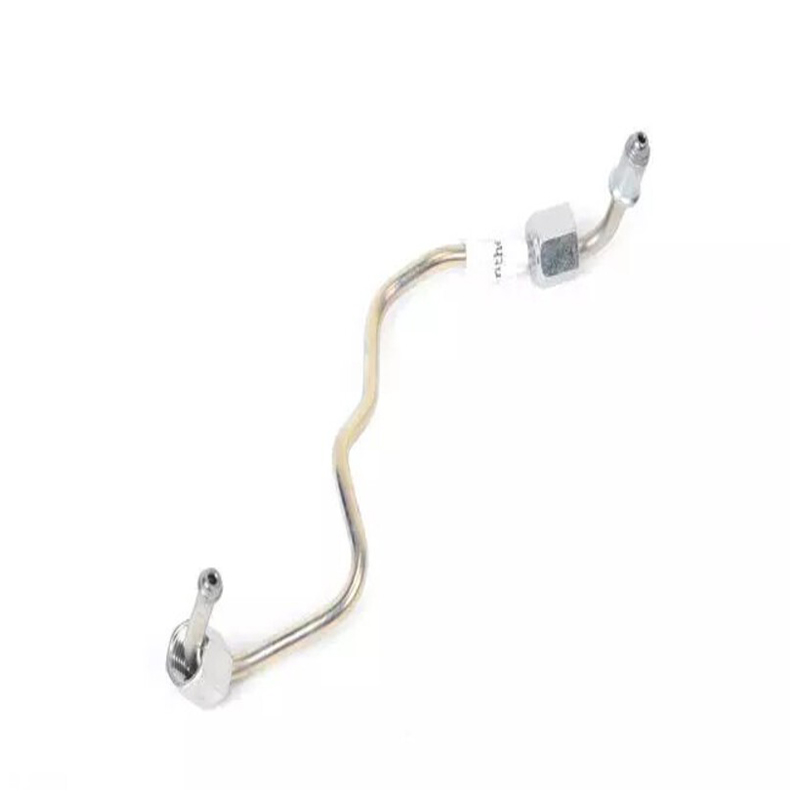 OE# 98063063 Fuel Injector Feed PipeDirect-fit OE# 98063063 fuel injector feed pipe for high-pressure diesel injection; worth checking when heat exposure and joint sealing point to feed-line replacement.View Product →
Reading the joint that is already on the car
Identification is usually faster by shape than by thread. Look at how the joint seals, then confirm dimensions.
- Push-connect: a plastic or steel body with a visible retainer clip, often with two squeeze tabs or a collar that needs a release tool. Never cut one off — the tool costs less than the line.
- Flare: a hex tube nut threading into a fitting body. Check the seat angle with a flare gauge before ordering; 45° and 37° look similar in a photo and behave very differently under pressure.
- Banjo: a hollow bolt with a drilled shank and two sealing washers, one on each face. If only one washer was replaced last time, the joint will weep again.
- Barb and clamp: rubber hose pushed over a raised bead, held by a spring or worm-drive clamp. Check that the hose is rated for the fuel actually in the tank, not just for petrol.
- Compression: a nut drawing an olive or ferrule onto the tube. Once crushed, the ferrule is scrap — refitting the same one is a guaranteed comeback.
- O-ring boss or ORFS: straight thread with an O-ring in a groove, sealing on a machined face. Torque is low and thread sealant is never used here.
Three dimensions decide fit: tube outside diameter, thread size, and seat form. A 3/8 in tube with a 5/8-18 thread is not interchangeable with 10 mm tube and M14, even though both will physically start on the fitting.
Inside a push-connect: where the seal actually lives
Push-connect joints appear simple and fail in a small number of predictable ways. The exploded isometric view below shows the four elements that matter, in the order they sit on the tube.
In service, the clip gets blamed far more often than it deserves. Real causes cluster around four items: an O-ring contaminated with grit during a filter change, a missing or stretched retainer clip, a tube end scored by a previous removal, and an O-ring in the wrong elastomer for ethanol blends or biodiesel. Any of these produces the same symptom — a fuel smell at the joint, sometimes only when the system is cold or under load.
Seven checkpoints before the line goes back on
- Confirm the pressure class of the circuit, not of the car model. The same engine family can run a low-pressure return and a high-pressure feed within 300 mm of each other.
- Match the standard, not just the thread: J2044 for push-connect, J512 or J514 for flare, J1926 for O-ring boss.
- Inspect the tube end under good light. A scored or ovalised sealing surface will leak no matter how new the O-ring is.
- Use a line or flare-nut wrench on tube nuts; open-ended spanners round the hex and shift the seat angle.
- Replace elastomers and crush washers every time. Reused copper washers and hardened O-rings are the most common source of repeat leaks.
- Respect torque figures. Over-tightening a banjo bolt stretches it and crushes the washer past recovery.
- Re-clip the line into its original supports. An unsupported line fatigues and cracks at the fitting rather than in the middle.
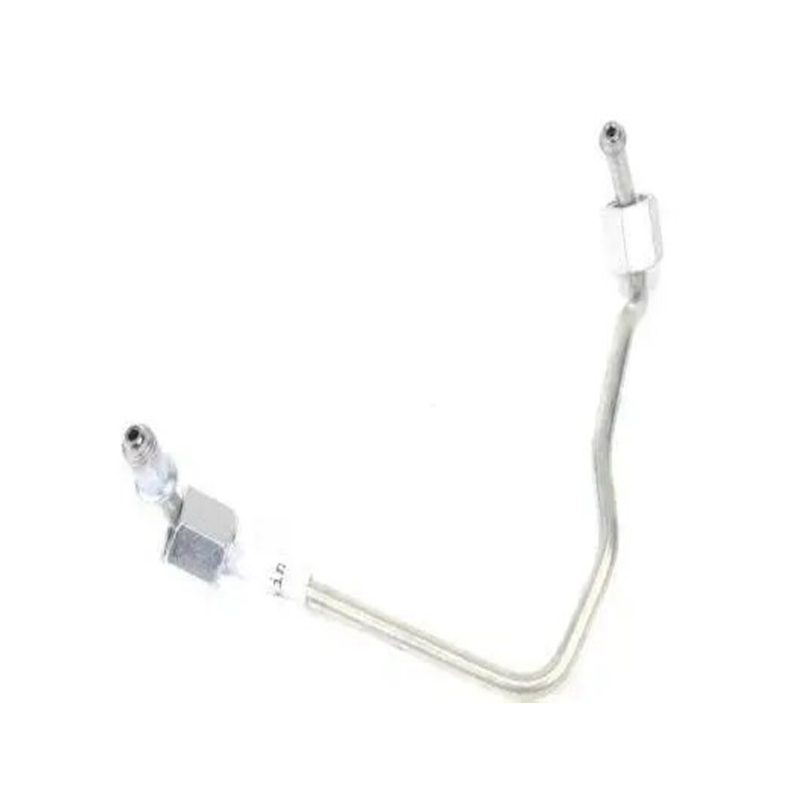 OE# 98063063 Diesel Injection Line ReplacementPrecision diesel injection line, OE# 98063063, for restoring high-pressure fuel delivery; relevant when joint leaks are traced beyond clips and O-rings.View Product →
Mistakes that come back as comebacks
| What went wrong | What the driver notices | Underlying risk |
|---|---|---|
| Low-pressure clamp used on a high-pressure feed | Fuel smell, damp line, long cranking | Pressure loss, poor atomisation, fire risk |
| Missing O-ring or partly seated clip | Intermittent weep that comes and goes | Joint can separate under vibration and pressure cycling |
| Wrong flare angle forced onto the seat | Leak only when cold or under load | Both seating faces damaged; both parts now scrap |
| Over-torqued banjo bolt | Dry for a few weeks, then weeping again | Washer crushed past recovery, bolt shank stretched |
| Petrol-rated hose used with high-ethanol or biodiesel | Softening, sweating at the barb | Material incompatibility rather than a fitting fault |
| Line left out of its clips | Nothing at first, then a crack | Fatigue fracture far from the original repair |
Sealing details at the barb, the ferrule and the O-ring boss are covered in more depth in this guide to preventing leaks in automotive pipe fittings.
Common questions about fuel line connections
Q1. What types of fuel line connections are most common?
Push-connect joints, flare fittings, banjos, barbed fittings with clamps, compression ferrules and threaded O-ring joints cover the vast majority of petrol and diesel vehicles in service.
Q2. Can I replace a quick-connect fuel line with a hose clamp?
Only on circuits below roughly 10 bar, and only with hose rated for the fuel in use. On direct-injection or common-rail feeds the clamp cannot hold the pressure or the pulsation.
Q3. How much pressure does a fuel line connection have to hold?
From about 0.3 bar on a return line to 4 bar on port injection, 50 to 200 bar on gasoline direct injection, and 1,800 bar or more on common-rail diesel. The joint must match the circuit, not the model year.
Q4. How do I know if my fuel line connection is leaking?
Look for a damp or dust-attracting patch at the joint, a raw fuel smell after a cold start, and a pressure drop on a gauge test. High-pressure weeps often show as a faint mist rather than a drip.
Q5. Are banjo fittings reusable?
The banjo body and hollow bolt usually are, provided the faces are flat and uncontoured. The copper or aluminium crush washers are single-use and must be replaced on every reassembly.
Q6. What is the difference between 45-degree and 37-degree flare fittings?
Both are metal-to-metal cone seats, but the included angle differs. A 45° SAE flare will not seal against a 37° seat, and mixing them damages both faces, so check with a gauge before ordering a replacement line.
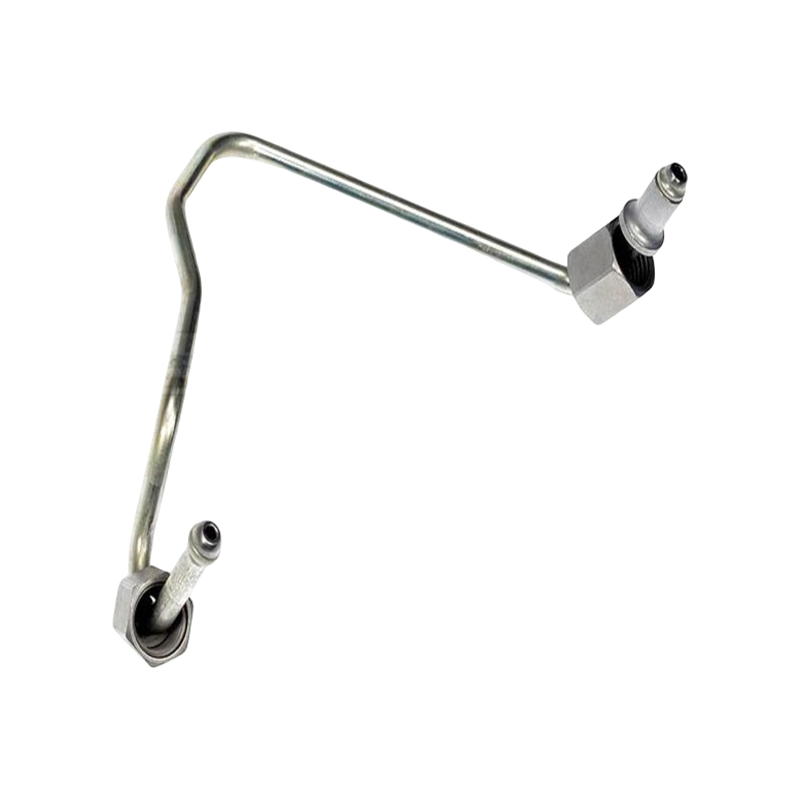
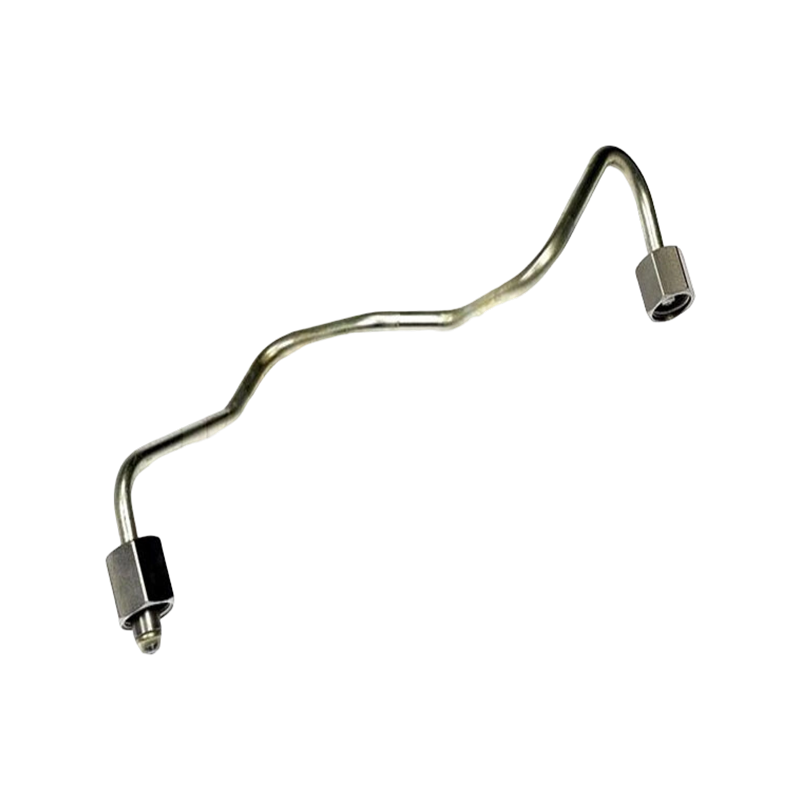
Choosing between connection types is mostly a matter of respecting what the circuit already does: its pressure band, its fluid, its heat load and the standard it was built to. When a line has to be replaced rather than repaired, matching the original connection form and seal material is quicker than adapting something that looks close enough. You can review our OE-style fuel line and injector line assemblies to compare part numbers and connection details before ordering.
Our Main Products

 Contact Us
+86-138 0586 3066
+86-574 8840 6311
 Products
 Send An E-mail
 Mobile
Copyright ©NINGBO JIATIAN AUTOMOBILE PIPE CO.,LTD. All Rights Reserved.
 China's Premium Automotive Tube Factory
Custom Automotive Pipe Fittings Supply
privacy