Industry News
NEWS
Why Does Your HVAC Heater Hose Leak? 7 Common Causes
Content
Quick Answer
HVAC heater hoses most commonly leak due to rubber degradation from heat and age, loose or corroded clamps, damaged fittings, coolant system overpressure, incorrect hose routing, physical abrasion, or a failing heater core connection. Most leaks can be identified by coolant puddles under the dashboard or engine bay, a sweet antifreeze smell inside the cabin, or visible wet spots on the hose surface. Early detection and timely automotive heater hose replacement prevents costly heater core damage and engine overheating.
The HVAC heater hose assembly is the circulatory link between your engine's cooling system and the heater core inside the cabin. Hot coolant — typically running between 85°C and 105°C (185°F–221°F) under pressures of 100–120 kPa — flows through the supply hose into the heater core, transfers its heat to cabin air via the blower, and returns through the return hose. This constant thermal cycling makes the heater hose assembly one of the most thermally stressed components in the vehicle.
A leak in the engine coolant heater hose does more than reduce cabin warmth. Coolant loss can trigger engine overheating within minutes, lead to a failed heater core (a repair that often costs several times more than a hose replacement), and in rare cases allow coolant vapor to enter the cabin — a health concern. Recognizing the cause of a leak early is the most cost-effective path to resolution.
A well-designed heater core hose assembly — whether a straight rubber hose, a molded heater hose with pre-formed bends, or a quick connect heater hose with integrated push-fit fittings — should last 5–10 years under normal operating conditions. When leaks appear before that window, one of the seven causes below is almost always responsible.
Every cold start followed by a hot engine cycle subjects the hose rubber to expansion and contraction stress. Over time — typically after 5–8 years or 80,000–130,000 km — EPDM or neoprene rubber loses elasticity, develops micro-cracks, and begins to weep coolant from the hose wall. Squeeze the hose gently: if it feels hard, spongy, or shows surface crazing, thermal degradation has set in. This is the most common reason for engine coolant heater hose failure in older vehicles.
Clamps hold the hose firmly over the inlet and outlet nipples on the heater core and engine ports. Spring clamps can lose tension over years; worm-drive screw clamps can corrode or be under-torqued during service. A gap of even 0.5mm between the clamp band and hose bead is enough to allow pressurized coolant to seep through. After any automotive heater hose replacement, always verify that clamps are tightened to the manufacturer's specified torque — typically 2–4 Nm for screw-type clamps — and positioned at least 3mm from the hose end.
The steel or aluminum nipples on the heater core that the hose slips over are prone to surface corrosion, particularly in vehicles operating in humid climates or where coolant has not been changed on schedule. A pitted or corroded nipple surface cannot form a proper seal, even with a new hose and new clamp. When replacing a leaking heater core hose assembly, always inspect and lightly sand the nipple surface. If the nipple is deeply pitted or cracked, the heater core itself may need attention before a new hose will seal reliably.
The cooling system is designed to operate at a capped pressure — typically 100–120 kPa — maintained by the radiator cap. A failing radiator cap that can no longer hold its rated pressure allows system pressure to spike. This excess pressure propagates through the entire coolant circuit, including the heater hose, stressing the hose wall and connections beyond their design limit. If you notice the top radiator hose feels unusually firm or the coolant reservoir overflows without overheating, test the radiator cap with a pressure gauge before replacing any hoses.
Using a straight replacement hose where a molded heater hose with a pre-formed curve is specified often results in a kinked installation. A kinked hose creates two problems simultaneously: a restriction in coolant flow that reduces cabin heat output, and a localized stress concentration where the rubber wall is over-bent. This stress point cracks far sooner than the rest of the hose. Always match the replacement hose to the OEM routing specification — a properly shaped molded heater hose eliminates kink points and extends service life significantly.
Heater hoses routed too close to the alternator belt, A/C compressor pulley, exhaust manifold heat shields, or engine brackets can develop wear spots where the hose surface rubs against a moving or hot component. These abrasion points thin the hose wall over time until a pinhole leak develops. During inspection, run your hand along the full hose length and feel for any thin, soft, or scraped sections. Rerouting the hose with protective split-loom conduit or a revised bracket position eliminates the root cause before a new hose is installed.
Many modern vehicles use quick connect heater hose assemblies with snap-fit plastic fittings and internal O-ring seals instead of traditional clamp-and-nipple connections. While these systems are convenient and reduce installation errors, the O-ring seal degrades with heat exposure over time. A failed O-ring at the quick connect joint produces a drip-type leak precisely at the connection point rather than along the hose body. Replacement typically requires a new O-ring kit or a complete quick connect heater hose assembly — most O-rings cannot be effectively re-compressed once they have set in a deformed shape.
Matching your observed symptoms to the most likely cause saves diagnostic time. The table below maps common symptoms to their probable root causes and recommended actions.
| Symptom | Likely Cause | Action |
|---|---|---|
| Wet hose surface, seeping along its length | Rubber degradation / wall crack | Replace hose |
| Drip at hose end, near clamp | Loose or corroded clamp | Re-tighten or replace clamp |
| Leak at heater core nipple junction | Corroded nipple / bad seal | Inspect nipple; replace assembly |
| Reservoir overflow, no overheating | Radiator cap overpressure | Pressure-test radiator cap |
| Pinhole leak mid-hose, worn spot | Abrasion / contact damage | Reroute + replace hose |
| Drip at plastic snap-fit connector | Failed quick connect O-ring | Replace O-ring or full assembly |
Based on aggregated automotive service data, rubber degradation and clamp failure account for the majority of HVAC heater hose leaks in vehicles over 6 years old. The chart below shows the relative frequency of each cause as a percentage of reported heater hose failures.
Heater Hose Failure Cause Frequency (%)
Not all heater hoses are interchangeable. Selecting the correct replacement type is as important as the quality of the hose material itself. Here is how the main categories compare:
Molded Heater Hose
Pre-shaped to follow the exact routing path of the OEM layout, eliminating kink points and clamp stress. Best choice when the routing path is complex or passes near heat sources. Slightly more difficult to source for older vehicles but provides the longest service life.
Quick Connect Heater Hose
Equipped with snap-fit push-to-connect fittings for fast, tool-free installation. Standard on many late-model vehicles. Requires a matching inlet nipple diameter and correct O-ring seat geometry — verify the fitting spec before ordering.
Straight / Universal Hose
Suitable for simple, low-bend routing paths. Requires more careful installation to avoid kinking. Available in various inner diameters (commonly 16mm, 19mm, 22mm) to match the nipple size on the heater core and engine outlet.
When performing automotive heater hose replacement, always drain and refill the coolant system with the manufacturer-specified coolant type and concentration. Mixing incompatible coolant formulations accelerates internal corrosion and degrades new hose rubber from the inside — particularly important if the old coolant was overdue for service.
Installation tip: After fitting a new heater core hose assembly, run the engine with the heater on full for 10–15 minutes, then re-check all clamp positions and connections for seepage once the system reaches normal operating temperature. Coolant system pressure at operating temperature is significantly higher than at cold start, and small gaps that appear sealed when cold may leak under full pressure.
Do not wait for a visible puddle. The following symptoms indicate heater hose distress that warrants inspection within 24–48 hours:
The chart below illustrates how rubber hose integrity (rated 100 at new) typically declines over vehicle age, highlighting why proactive inspection at the 5-year mark is recommended even if no leak is visible.
Hose Rubber Integrity Score vs Vehicle Age (Years)
Hose integrity drops sharply after year 5–6 as thermal cycling fatigue accumulates. Proactive inspection at this interval prevents unplanned failures.
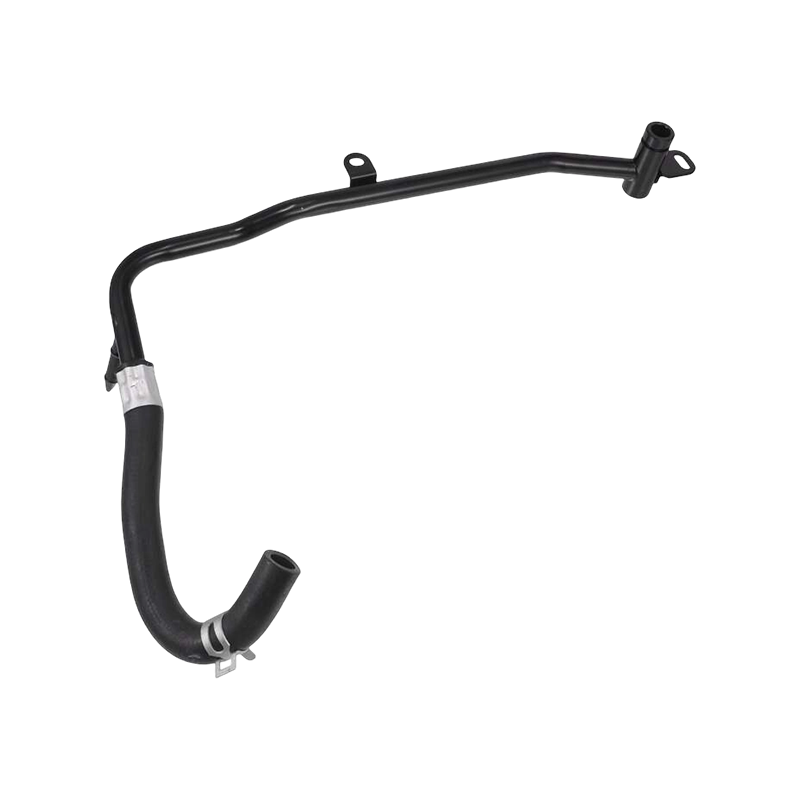
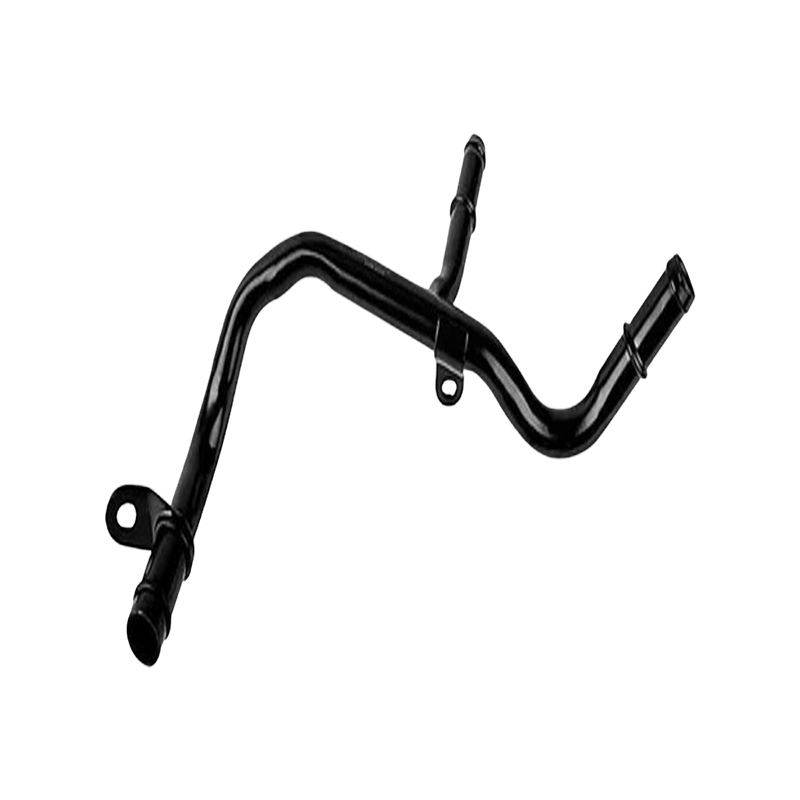
The HVAC heater hose assembly is a critical component in a vehicle's heating, ventilation, and air conditioning system. It transports high-temperature coolant from the engine's cooling system to the vehicle's heater core, and consists of prefabricated rubber hoses, connectors, metal pipe sections (on select models), and necessary seals — ensuring efficient and safe delivery of engine heat to the cabin.
JIATIAN is a professional China Automotive HVAC Heater Hose Assembly Manufacturer and Factory, located in Wanhou, Zhanqi Town, Yinzhou District, Ningbo City — 25 kilometers from Ningbo Lishu Airport and 5 kilometers from Ningbo Coastal Industrial Zone, with convenient logistics access for global export.
Built on the foundation of Ningbo Xingxin Metal Products Factory (established in 1995), JIATIAN is a high-tech enterprise specializing in automotive pipe fittings with a facility covering 32,000 square meters (factory area: 26,000 m²). The company operates a comprehensive production fleet including 10 CNC fully automatic pipe bending machines, 2 large-scale brazing furnace assembly lines, an 800T hydraulic water expansion machine, 4 fully automatic laser welders, 4 sets of welding robots, and 8 large-scale machining centers.
JIATIAN's water expansion corrugated pipe equipment and technology are recognized as industry-leading in China. With its own R&D and processing centers and a comprehensive in-house laboratory, JIATIAN is committed to creating the world's leading automotive bellows with outstanding quality and innovative technology — ensuring every heater hose assembly performs reliably across diverse operating environments and vehicle applications.
Q1: How do I know if my heater hose is leaking or if it's the heater core?
If coolant is dripping in the engine bay along the hose path or at the firewall connection, the hose or its clamp is the likely culprit. If coolant appears inside the cabin, on the passenger-side floor mat, or you see fogging on the windshield, the heater core itself may be leaking. A shop pressure test of the cooling system with the hoses isolated will definitively identify the leak source.
Q2: Can I drive with a leaking heater hose?
Only for a very short distance to a safe stopping point. A leaking engine coolant heater hose causes the coolant level to drop, and even a moderate coolant loss can trigger engine overheating within 10–20 minutes of driving. An overheated engine risks warped cylinder heads or a blown head gasket — both far more expensive than replacing a heater hose. Check the temperature gauge and coolant level before driving, and do not continue if either is abnormal.
Q3: How often should I replace my automotive heater hose?
Most manufacturers recommend inspecting heater hoses every 2 years or 40,000 km and replacing them proactively at 5–10 years regardless of visible condition. Rubber degradation often begins internally — a hose that looks clean externally may be soft and delaminated inside. The cost of a heater hose assembly replacement is minimal compared to a failed heater core or engine damage from coolant loss.
Q4: What is the difference between a molded heater hose and a straight heater hose?
A molded heater hose is manufactured with pre-formed bends that match the specific routing geometry of a given vehicle make and model. A straight hose is a generic, universal section that must be bent during installation. Molded hoses are preferred because they eliminate kink risks, maintain full bore diameter throughout the bends, and are less likely to shift position or rub against adjacent components over time.
Q5: How do I install a quick connect heater hose without damaging the fitting?
To install a quick connect heater hose, ensure the inlet nipple is clean and free of burrs. Lubricate the O-ring lightly with clean coolant. Push the fitting straight onto the nipple — do not twist — until you hear or feel the retaining clip click into position. Tug the hose back gently to confirm it is locked. When disconnecting, press the release tab or collar fully before pulling; forcing a locked quick connect can crack the fitting body.
Q6: Does coolant type affect heater hose life?
Yes. Using the wrong coolant type or mixing incompatible formulations (for example, OAT and HOAT coolants) creates a chemical reaction that accelerates internal rubber degradation and deposits scale inside the heater core. Always use the coolant type specified in your vehicle's owner manual and change it at the recommended interval — typically every 3–5 years. Degraded coolant with low pH becomes acidic and attacks both rubber hoses and metal fittings from the inside.
Contact Us
+86-138 0586 3066
+86-574 8840 6311
Send An E-mail
Mobile
Copyright ©NINGBO JIATIAN AUTOMOBILE PIPE CO.,LTD. All Rights Reserved.

China's Premium Automotive Tube Factory
Custom Automotive Pipe Fittings Supply
privacy