NEWS

Home / News / Industry News / How to Choose the Right Fuel Injector Pipe for Your Engine?

How to Choose the Right Fuel Injector Pipe for Your Engine?


Choosing the right fuel injector pipe comes down to matching three critical parameters: operating pressure rating, material compatibility with your fuel type, and dimensional fit to your engine's injector spacing. Get these right and you get clean, consistent fuel delivery with zero leaks. Get them wrong and you risk fuel starvation, injector damage, or — in worst cases — fuel line failure under pressure.

This guide gives you a practical, data-backed framework for selecting the correct fuel injector line for gasoline, diesel, and alternative fuel engines, covering material selection, pressure ratings, fitment standards, and maintenance considerations.

What Is a Fuel Injector Pipe and Why the Right Choice Matters

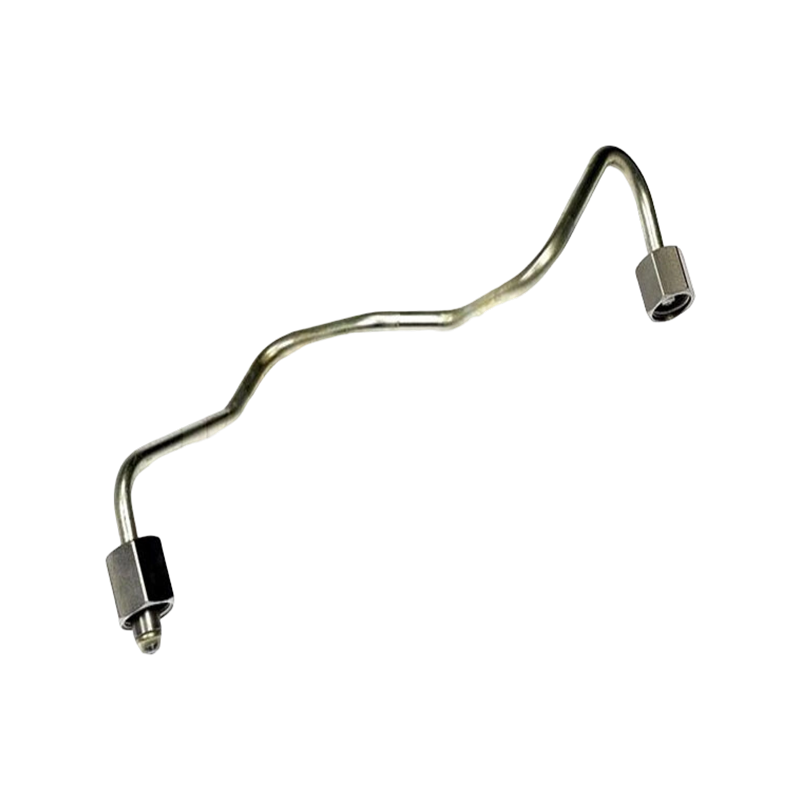
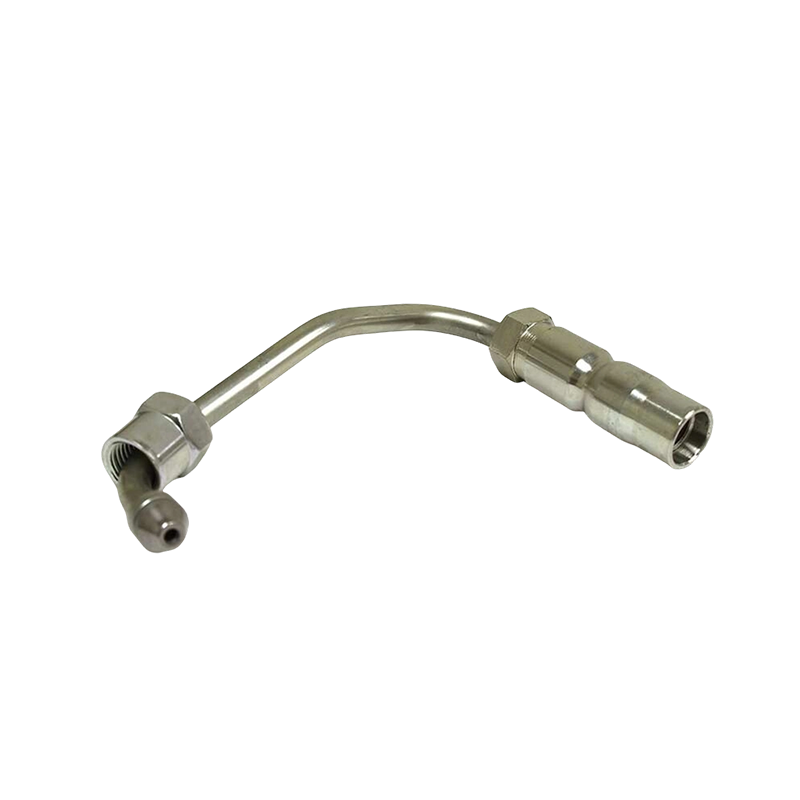
A fuel injector pipe (also called a fuel injector line) is the high-pressure conduit that delivers metered fuel from the fuel rail directly to each injector in an engine. Unlike low-pressure fuel supply hoses, injector pipes operate under significant internal pressure — typically 50 to 200 bar in gasoline direct injection (GDI) systems and up to 2,500 bar in modern common rail diesel systems.

These lines must simultaneously handle:

  • Extreme pressure pulses — injectors open and close thousands of times per minute, creating repetitive pressure waves
  • Thermal cycling — engine bay temperatures range from cold starts at -40°C to operating temperatures exceeding 130°C
  • Vibration and flex — engine movement and road vibration create constant mechanical stress at connection points
  • Chemical compatibility — fuel formulations including ethanol blends, biodiesel, and additives must not degrade the pipe material

A substandard or mismatched fuel injector line does not simply underperform — it fails. And fuel line failure in a high-pressure system is a serious safety event.

Matching Fuel Injector Pipe to Engine Type and Fuel System

The single most important starting point is knowing your engine's fuel system architecture. Different systems operate at vastly different pressures, and the fuel injector pipe must be rated accordingly.

Table 1: Fuel system pressure ranges and corresponding injector pipe requirements
Engine / Fuel System Operating Pressure Recommended Pipe Material Key Requirement
Port Fuel Injection (PFI) Gasoline 3–5 bar Steel or stainless steel Corrosion resistance, flexibility
Gasoline Direct Injection (GDI) 50–200 bar High-strength steel alloy Pressure fatigue resistance
Common Rail Diesel (CRD) 1,000–2,500 bar Precision-formed steel tube Ultra-high pressure, zero tolerance on wall thickness
LPG / CNG Alternative Fuel 10–25 bar Stainless steel or copper alloy Gas-tight sealing, material inertness

For common rail diesel applications, the fuel injector line must also be engineered to absorb pressure spikes without fatigue cracking. Lines typically feature wall thicknesses of 2.0–3.5 mm and undergo autofrettage — a pre-stressing process that significantly extends fatigue life under cyclic loading.

Material Selection: What the Pipe Is Made Of Determines How Long It Lasts

The material of a fuel injector pipe determines its pressure rating, temperature tolerance, chemical resistance, and service life. These are the main materials used across the automotive industry:

Carbon Steel

The most common material for high-pressure diesel fuel injector lines. Carbon steel offers excellent tensile strength (up to 800 MPa) and cost-effectiveness. However, it requires surface treatment — typically zinc plating, phosphating, or protective coating — to prevent internal and external corrosion, especially when ethanol-blended fuels are used.

Stainless Steel (304 / 316L)

Preferred for applications involving corrosive fuel blends, marine environments, or long service intervals. 316L stainless steel offers superior resistance to ethanol and biodiesel-induced corrosion. It is standard in premium and performance fuel injector line applications where replacement intervals are extended beyond 100,000 km.

Corrugated / Bellows-Type Steel Pipe

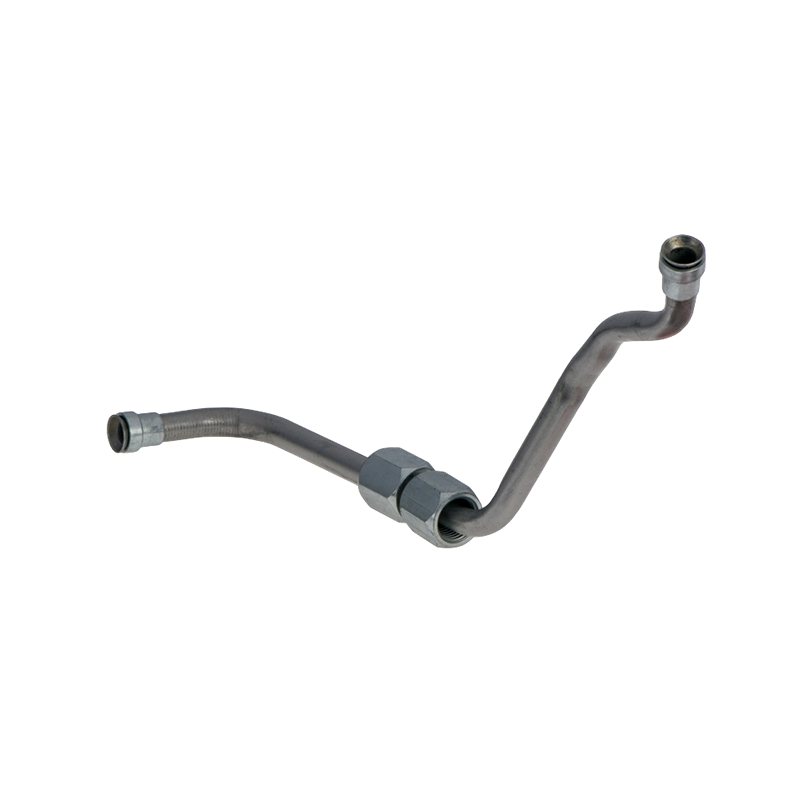
Corrugated fuel injector pipes absorb vibration and accommodate slight misalignment between the fuel rail and injector seats. The corrugated profile provides axial and lateral flexibility without sacrificing burst pressure rating. This design is increasingly used in turbocharged and high-performance engines where thermal expansion is more pronounced.

Fuel Injector Pipe Material — Tensile Strength Comparison (MPa)

High-Strength Steel Alloy (GDI / CRD)800 MPa
Carbon Steel (standard)550 MPa
316L Stainless Steel485 MPa
304 Stainless Steel515 MPa
Copper Alloy (LPG / CNG)310 MPa

Approximate minimum tensile strength values based on standard material grades

Dimensional Accuracy: Why Tolerances Cannot Be Compromised

A fuel injector pipe that is 0.3 mm out of tolerance at the seating cone can cause a leak path that goes undetected under low pressure but fails catastrophically at full operating pressure. For this reason, dimensional accuracy is a non-negotiable requirement, especially in high-pressure diesel systems.

Key dimensional parameters to verify when selecting a fuel injector line include:

  • Outer diameter (OD): Typically ranges from 6 mm to 14 mm for automotive applications; must match fitting bore exactly
  • Wall thickness: Directly determines burst pressure; standard diesel injector lines use 2.0–3.5 mm walls
  • Cone angle at end fittings: Typically 60° DIN or SAE standard; mixing standards causes leak points
  • Bend radius: Must match original routing — forced bending in the wrong radius creates stress concentration points
  • Overall length and routing geometry: OEM-matched lines ensure correct mounting without tension or compression at end fittings

For replacement parts, always cross-reference the OEM part number and confirm the pipe geometry matches using the original or a manufacturer-verified dimensional drawing. Generic "universal fit" fuel injector pipes are not appropriate for high-pressure diesel or GDI applications.

Fuel Compatibility: Ethanol, Biodiesel, and Modern Fuel Blends

Modern fuel formulations have changed significantly in the past decade. E10 and E85 ethanol-blended gasoline, B20 and B100 biodiesel, and hydrotreated vegetable oil (HVO) all have different chemical interactions with fuel injector line materials.

  • Ethanol (E10–E85): Hygroscopic and mildly corrosive — plain carbon steel without coating will develop internal corrosion and particulate contamination within 18–24 months in continuous E85 service
  • Biodiesel (B20–B100): Higher lubricity but contains free fatty acids that can attack zinc coatings and certain sealants; stainless steel or coated steel is recommended
  • HVO (Hydrotreated Vegetable Oil): More chemically stable than FAME biodiesel; compatible with standard diesel-rated injector pipes
  • Diesel with ULSD specification: Lower sulfur content reduces natural lubricity; injector wear increases and particulate sensitivity in fuel lines becomes more critical

If your vehicle regularly uses fuel blends above E20 or B20, specify a fuel injector pipe with stainless steel construction or an internal corrosion-resistant coating confirmed by the manufacturer to be compatible with your fuel type.

Internal Corrosion Risk by Fuel Type — Carbon Steel Injector Pipe (Relative Index)

E85 Ethanol BlendHigh
B100 BiodieselMedium-High
E10 Gasoline BlendMedium
ULSD DieselLow
HVO / Renewable DieselVery Low

Relative corrosion risk index for uncoated carbon steel fuel injector pipes across fuel types

Key Standards and Certifications to Look For

A fuel injector pipe or fuel injector line sold for automotive use should comply with recognized industry standards. These standards define minimum requirements for pressure testing, material composition, dimensional tolerances, and surface finish.

  • DIN 73379: European standard governing the dimensions and tolerances of steel pipes for automotive fuel systems
  • SAE J527: SAE standard for brazed double-wall low-carbon steel tubing used in automotive fuel and brake systems
  • ISO 8434: Specifies requirements for metallic tube end fittings used in fuel injection systems
  • ISO 9001:2015: Quality management system certification ensuring process consistency at the manufacturing level
  • IATF 16949: Automotive-specific quality management standard — the benchmark for Tier 1 and Tier 2 automotive component suppliers

When sourcing from a manufacturer, request compliance documentation for the standards applicable to your market. For export to European markets, DIN and ISO compliance is typically required. For North American OEM supply chains, SAE standards apply.

Inspection and Replacement: When to Change a Fuel Injector Line

Fuel injector pipes do not have a defined replacement interval in most OEM service schedules — they are designed to last the life of the vehicle under normal operating conditions. However, several conditions warrant inspection and potential replacement:

  1. Visible surface corrosion or pitting — even external rust can indicate internal wall degradation in carbon steel lines
  2. Fuel smell in the engine bay — seepage at end fittings often precedes a complete joint failure and is always a cause for immediate inspection
  3. Rough idle or misfires linked to fuel delivery — a partially blocked or cracked injector line creates inconsistent fuel pressure to one or more injectors
  4. After any collision or impact near the fuel rail area — impact-induced micro-cracks in high-pressure lines may not be visible externally
  5. High-mileage vehicles (above 200,000 km) operating on ethanol blends — cumulative corrosion fatigue warrants proactive replacement of uncoated carbon steel lines

Always replace fuel injector lines as a complete set per cylinder bank rather than individually. Mixing old and new lines creates uneven compliance and can mask ongoing pressure balance issues across injectors.

About the Manufacturer

As a professional China Fuel Injector Line manufacturer and Fuel Injector Pipe factory, the company is located in Wanhou, Zhanqi Town, Yinzhou District, Ningbo City — 25 kilometers from Ningbo Liushi Airport and 5 kilometers from Ningbo Coastal Industrial Zone, with convenient logistics access to global markets.

Established on the foundation of Ningbo Xingxin Metal Products Factory (founded in 1995), the company has grown into a high-tech enterprise specializing in automotive pipe fittings. The facility covers 32,000 square meters in total, with a production floor area of 26,000 square meters.

The company operates an extensive manufacturing infrastructure, including 10 CNC fully automatic pipe bending machines, 2 large-scale brazing furnace assembly lines, 10 hydraulic internal forming machines (handling diameters from 10 mm to 80 mm and lengths up to 1.5 meters), 1 800T hydraulic water expansion machine, 4 fully automatic laser welders, 4 sets of welding robots, 8 large-scale machining centers, 6 arc welding machines, and over 30 supporting pipe forming machines.

The company's water expansion corrugated pipe equipment and technology are currently at the industry leading level in China. A comprehensive R&D center and laboratory have been established in-house. The company is committed to creating the world's leading automotive bellows products with outstanding quality and innovative technology, ensuring each product performs reliably across all operating environments and driving continuous advancement in the industry.

Frequently Asked Questions

Q1. What is the difference between a fuel injector pipe and a fuel injector line?

The terms are used interchangeably in the industry. Both refer to the rigid or semi-rigid metal conduit that connects the fuel rail to each individual fuel injector. "Fuel injector line" is more commonly used in North American technical literature, while "fuel injector pipe" is the preferred term in European and Asian markets.

Q2. Can I use a universal fuel injector pipe instead of an OEM-matched part?

For low-pressure port fuel injection systems (under 10 bar), a correctly sized and rated universal fuel injector line may be acceptable as a temporary measure. For GDI systems above 50 bar and all common rail diesel systems, only OEM-matched or engineered equivalent pipes with verified dimensional accuracy should be used. The risk of end fitting leaks or fatigue failure is too high with generic parts in high-pressure applications.

Q3. How do I know if my fuel injector pipe is leaking?

Early signs include a persistent fuel smell in the engine bay, fuel staining or wetness around the injector fittings, rough idle or cylinder-specific misfires, and in some cases a drop in fuel rail pressure readings. A UV dye test or pressure decay test performed by a technician can confirm small leaks that are not yet visible to the naked eye.

Q4. Is stainless steel always better than carbon steel for fuel injector lines?

Not in every application. Stainless steel offers superior corrosion resistance but is harder to form precisely and typically carries a higher material cost. For standard diesel or gasoline service with OEM replacement timelines, properly coated carbon steel performs reliably. Stainless steel becomes the better choice for high-ethanol fuels, marine or high-humidity environments, and applications requiring extended service intervals.

Q5. What causes fuel injector lines to crack or fail prematurely?

The most common causes are pressure fatigue from repeated injection cycles, vibration-induced stress at rigid mounting points, internal corrosion from fuel-water contamination, incorrect installation torque on end fittings, and physical damage from adjacent components. Using the correct pipe specification and ensuring proper routing and support during installation significantly reduces premature failure rates.

Q6. What torque should I apply when installing fuel injector pipe fittings?

Always follow the engine manufacturer's specified torque values, as these vary by fitting size and thread type. As a general reference, M12 injector line nuts on common rail diesel systems are typically torqued to 25–30 Nm. Over-tightening deforms the seating cone and creates a leak path; under-tightening allows the fitting to back off under pressure cycling. Use a calibrated torque wrench — never estimate by feel on high-pressure fuel connections.