Industry News
NEWS
What Are the Common Symptoms of a Faulty EGR Line?
Content
A faulty EGR line typically presents through five core symptoms: increased engine emissions, rough idling, reduced fuel efficiency, the illumination of the check engine light, and noticeable loss of power under load. These symptoms can appear individually or in combination, and they tend to worsen progressively if the issue is left unaddressed. Understanding each symptom and its underlying cause helps vehicle owners and technicians act quickly before more serious engine damage occurs.
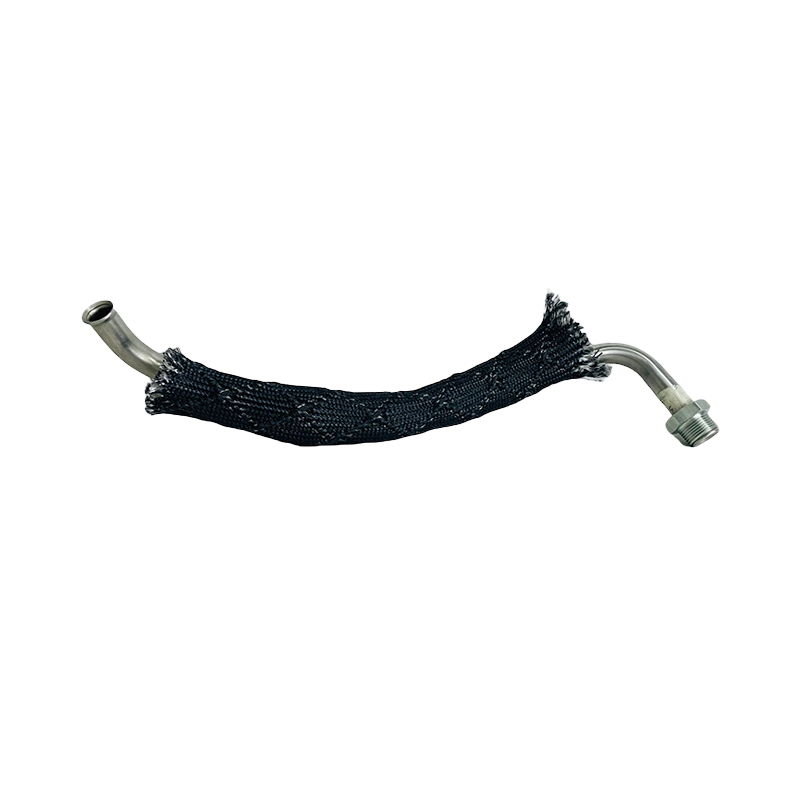
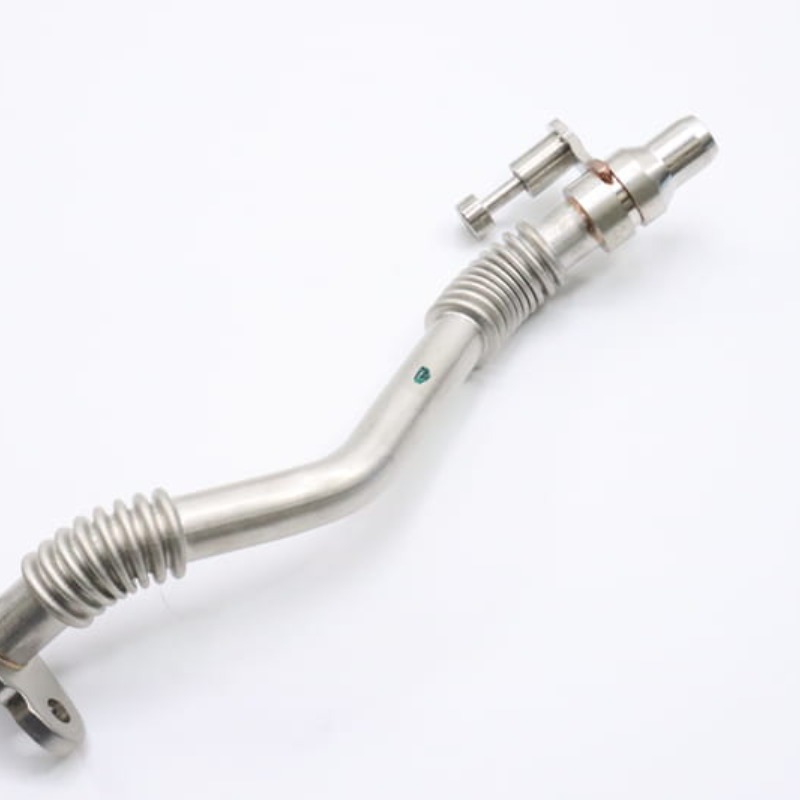
The Exhaust Gas Recirculation Line — commonly called the EGR Line — is a critical component in a vehicle's emissions control system. It routes a controlled portion of exhaust gases back into the intake manifold to lower combustion temperatures and reduce nitrogen oxide (NOx) emissions. When this line develops a crack, blockage, or leak, the carefully calibrated recirculation process breaks down, and the effects are felt throughout the engine system.
One of the earliest and most consistent indicators of an EGR Line problem is the illumination of the check engine light. Modern engine control units (ECUs) continuously monitor EGR flow rates, and any deviation from expected parameters triggers a stored fault code.
The most commonly associated diagnostic trouble codes (DTCs) include:
A P0401 code, for example, indicates that the ECU is detecting less exhaust gas recirculation than commanded — a direct sign that the Exhaust Gas Recirculation Line may be blocked, kinked, or leaking before the intake manifold. Retrieving the specific DTC with an OBD-II scanner is the fastest way to narrow down whether the EGR Line is the source of the fault.
A damaged or leaking EGR Line disrupts the air-fuel mixture in the intake manifold. If the line develops a crack, it can allow unmetered exhaust gas to enter the intake at the wrong time or in the wrong quantity, leading to an overly lean or rich combustion event.
Drivers typically report this as a rough, unstable idle — the engine RPM fluctuating between 500 and 900 RPM instead of holding steady near the manufacturer's specified idle speed (typically 700–800 RPM for most gasoline engines). In more severe cases, the engine may stumble or hesitate when accelerating from a stop, as the ECU struggles to compensate for the inaccurate recirculation flow.
A blocked EGR Line presents the opposite problem: the EGR valve opens but no gas flows through, causing combustion temperatures to spike. This often manifests as a subtle knocking or pinging sound at idle, particularly when the engine is warm.
The primary purpose of the Exhaust Gas Recirculation Line is NOx reduction. By reintroducing exhaust gases into the combustion chamber, peak combustion temperatures are reduced — typically by 100 to 200°C — which directly suppresses NOx formation. When the EGR Line fails, this temperature-lowering effect disappears.
The real-world impact is significant. Research shows that a non-functional EGR system can increase tailpipe NOx emissions by 30% to 50% compared to a properly functioning system. In regions with strict vehicle emissions testing requirements, this alone can result in an immediate test failure, making the vehicle non-compliant for road use until the EGR Line is repaired or replaced.
A faulty EGR Line can negatively affect fuel economy in two distinct ways, depending on whether the failure mode is a blockage or a leak.
When carbon deposits block the EGR Line — a common failure mode in high-mileage diesel vehicles — no exhaust gas reaches the intake. The ECU may attempt to compensate by enriching the fuel mixture to manage elevated combustion temperatures, which directly increases fuel consumption. Drivers may notice a 5% to 15% drop in fuel efficiency compared to baseline performance.
A cracked or loose EGR Line introduces uncontrolled exhaust gas into the intake manifold. This dilutes the fresh air-fuel charge, reducing combustion efficiency and requiring the ECU to inject additional fuel to maintain power output. In turbocharged diesel applications, a leaking EGR Line upstream of the turbocharger can also cause the turbo to work harder, increasing fuel demand further.
Power loss is most noticeable during acceleration or when climbing inclines. A faulty EGR Line — particularly one that is leaking — reduces the density and oxygen content of the air entering the combustion chamber. Less oxygen means less efficient combustion and reduced power output.
In turbocharged diesel engines, the situation can escalate. If the EGR Line routes gas through the intercooler circuit, a leak can contaminate the charge air cooler with oil residue from exhaust gases, further restricting airflow and compounding the power loss. Some vehicles may enter a reduced-power "limp mode" as a protective measure when EGR-related fault codes are detected.
In some cases, EGR Line failure produces visible or sensory symptoms that are immediately apparent without diagnostic equipment.
Understanding how EGR Lines fail helps in both diagnosis and prevention. The following table summarizes the primary failure modes, their causes, and the symptoms they produce:
| Failure Mode | Primary Cause | Key Symptoms |
|---|---|---|
| Carbon blockage | Soot and carbon buildup from exhaust gases over time | P0401 code, black smoke, power loss |
| Cracked or split line | Thermal fatigue from repeated heat cycling | Rough idle, burning smell, check engine light |
| Loose or disconnected fitting | Vibration, improper installation, corroded clamps | Hissing noise, exhaust smell, P0400 code |
| Corrosion or rust | Moisture exposure, road salt, low-grade materials | Visible rust, pinhole leaks, intermittent codes |
| Kinked or collapsed line | Improper routing, impact damage | Restricted flow, P0401 code, reduced efficiency |
EGR Line problems rarely appear suddenly in their most severe form. They typically follow a progressive pattern that becomes easier to recognize with awareness. The chart below illustrates how symptom severity tends to escalate as the EGR Line deteriorates:
Early intervention — at the first appearance of a check engine light or minor idle roughness — generally allows for a straightforward EGR Line inspection or replacement. Waiting until power loss and excessive smoke become apparent often means additional components such as the EGR valve, cooler, or intake manifold have been affected as well.
Accurate diagnosis of an EGR Line fault involves a combination of electronic scanning, visual inspection, and flow testing. A systematic approach avoids unnecessary part replacement.
NINGBO JIATIAN AUTOMOBILE PIPE CO., LTD. is a professional China Exhaust Gas Recirculation Line manufacturer and EGR Line factory, located in Wanhou, Zhanqi Town, Yinzhou District, Ningbo City — just 25 kilometers from Ningbo Liushi Airport and 5 kilometers from Ningbo Coastal Industrial Zone, with convenient transportation access and excellent surrounding conditions.
Established on the foundation of Ningbo Xingxin Metal Products Factory (founded in 1995), the company has grown into a high-tech enterprise specializing in the production of automotive pipe fittings. The facility spans 32,000 square meters, with a factory area of 26,000 square meters.
The company's main products focus on manufacturing and developing automotive corrugated pipes. Production capabilities include 10 CNC fully automatic pipe bending machines, 2 large-scale brazing furnace assembly lines, 10 hydraulic internal forming machines (capable of processing lengths up to 1.5 meters and diameters from 10mm to 80mm), 1 800T hydraulic water expansion machine, 4 fully automatic laser welders, 4 welding robots, 8 large-scale machining centers, 6 arc welding machines, and over 30 supporting pipe forming machines.
JIATIAN maintains its own R&D and processing centers. The water expansion corrugated pipe equipment and technology are recognized as being at the industry leading level. A comprehensive laboratory has been established to support quality assurance and product innovation. The company is committed to creating the world's leading automotive bellows through outstanding quality and innovative technology, ensuring that each product performs reliably across all operating environments.
Contact Us
+86-138 0586 3066
+86-574 8840 6311
Send An E-mail
Mobile
Copyright ©NINGBO JIATIAN AUTOMOBILE PIPE CO.,LTD. All Rights Reserved.

China's Premium Automotive Tube Factory
Custom Automotive Pipe Fittings Supply