NEWS

Home / News / Industry News / How to replace HVAC heater hose assembly?

How to replace HVAC heater hose assembly?


Replacing an HVAC heater hose assembly requires draining the coolant, removing the old hose set with its connectors, and installing a pre-molded OEM-compatible replacement — typically completable in 1–2 hours with basic tools. The most critical steps are ensuring pressure-rated compatibility and achieving leak-free sealing at every connection point. This guide covers everything from material science to step-by-step installation, helping fleet managers, mechanics, and vehicle owners source the right HVAC heater hose assembly and complete the job correctly.

As a trusted heater hose assembly manufacturer with over 28 years of production experience, JIATIAN supplies OEM-grade assemblies to automotive markets worldwide. Our assemblies are engineered to exact factory specifications — covering correct bend geometry, pressure tolerance, and chemical resistance — so you get a direct-fit part, not a generic workaround.

OEM Compatibility: Which Vehicles Use Heater Hose Assemblies?

A high-quality OEM heater hose assembly is engineered to match the exact routing path, fitting diameter, and connector type of the original part. Compatibility is not just about hose diameter — it includes bend angles, connector lock types (snap-fit vs. threaded), and overall assembly length. Mismatched assemblies can cause improper seating against the heater core inlet, leading to chronic slow leaks or sudden failures under load.

The table below outlines representative vehicle platforms and the typical heater hose assembly specifications they require. As a leading custom heater hose assembly supplier, JIATIAN can produce assemblies matching any platform on request, including low-volume specialty vehicles.

Vehicle Category Typical Hose Inner Diameter Connector Type Assembly Length Range Pressure Rating
Compact Sedan / Hatchback 16 mm – 19 mm Quick-snap plastic 400 – 700 mm ≤ 0.25 MPa
Mid-Size SUV / Crossover 19 mm – 22 mm Metal crimp + O-ring 600 – 1,000 mm ≤ 0.30 MPa
Full-Size Pickup / Van 22 mm – 32 mm Threaded steel nipple 800 – 1,500 mm ≤ 0.35 MPa
Light Commercial / Bus 25 mm – 38 mm Heavy-duty clamp + flange 1,000 – 2,000 mm ≤ 0.40 MPa
Electric / Hybrid (PHEV) 10 mm – 16 mm Push-lock barbed fitting 300 – 600 mm ≤ 0.20 MPa
Table 1: Representative OEM heater hose assembly specifications by vehicle category. Always verify part number and fitting dimensions before ordering.

OEM Assembly Coverage Rate by Vehicle Segment (%)

Sedan/Hatchback 96% SUV/Crossover 91% Pickup/Van 86% Commercial/Bus 79% EV/Hybrid 70%

This chart illustrates JIATIAN's current OEM-matched catalog coverage across major vehicle segments. Sedans and hatchbacks represent the most mature product lines at 96% coverage, driven by high replacement volumes globally. EV and hybrid coverage is expanding rapidly as our engineering team develops new low-pressure, thermally efficient hose assemblies for next-generation vehicle platforms. Custom engineering requests for unlisted models are accepted with a 4–6 week lead time.

Material Science: What Makes a Heater Hose Assembly Last?

The durability of any automotive heater hose replacement comes down to material selection. Heater hoses operate in one of the most demanding under-hood environments: sustained coolant temperatures between 80°C and 120°C, cyclical pressure pulses from the water pump, and constant exposure to glycol-based antifreeze, engine oil mist, and ozone. A hose compound that fails in any of these dimensions will crack, swell, or delaminate — sometimes within a single heating season.

EPDM: The Industry Standard for Coolant Hoses

EPDM (Ethylene Propylene Diene Monomer) is the dominant material in modern EPDM heater hose assembly factory production for good reason. Its saturated polymer backbone provides exceptional resistance to heat aging — retaining over 80% of its original tensile strength after 3,000 hours at 125°C. EPDM also resists ozone cracking, which is critical in warm climates and high-altitude environments where UV exposure accelerates surface degradation. JIATIAN's EPDM compound is formulated with a specific carbon black loading and peroxide cure system to maximize both flex life and chemical inertness.

Silicone Hose Assemblies: High-Performance Alternative

For vehicles operating in extreme thermal cycles — turbocharged engines, heavy-duty work trucks, and performance applications — silicone heater hose wholesale products offer a compelling upgrade. Silicone maintains flexibility at temperatures as low as -60°C and can sustain continuous service at 180°C. While silicone's glycol permeability is slightly higher than EPDM, proper wall thickness (≥ 4 mm for coolant service) makes this a non-issue in practice. Silicone assemblies are also available in reinforced versions with polyester braiding for burst-pressure applications exceeding 0.6 MPa.

Steel Sections and Corrosion-Resistant Coatings

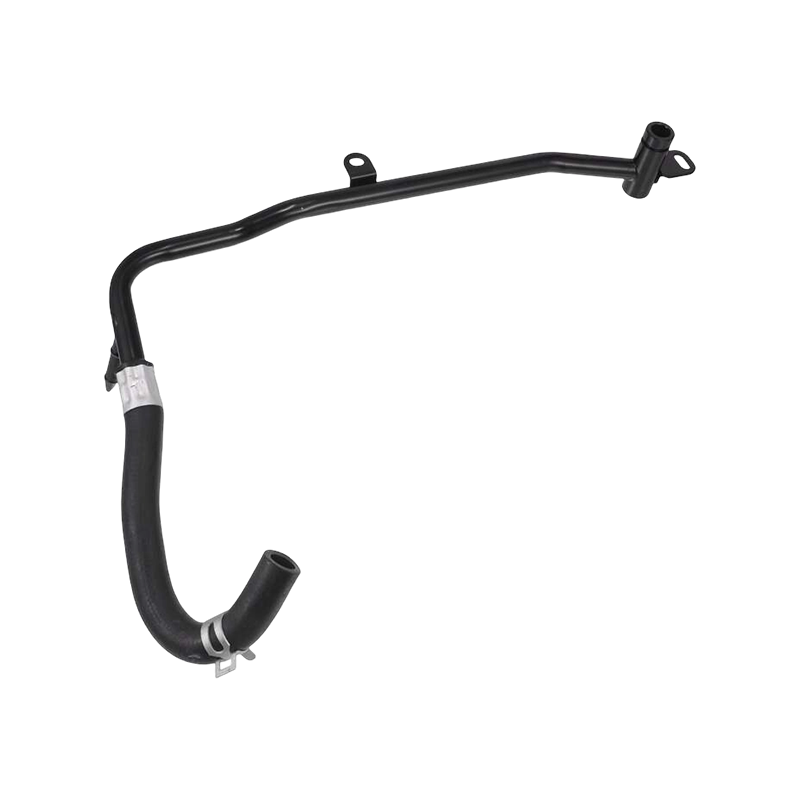
Many modern assemblies integrate pre-formed steel tube sections — particularly where hoses route near exhaust components or require rigid support through tight chassis passages. JIATIAN applies a zinc-phosphate + epoxy primer coating to all steel sections, providing salt-spray resistance exceeding 500 hours per ISO 9227. This is critical for vehicles operated in northern climates where road salt causes aggressive galvanic corrosion at hose-to-steel junctions.

Material Performance Radar: EPDM vs. Silicone vs. Standard Rubber

Heat Resistance Chemical Resist. Flex Life Cold Flexibility Ozone Resist. Burst Pressure EPDM Silicone Standard Rubber

The radar chart above compares three heater hose materials across six critical performance dimensions. EPDM leads in ozone resistance and heat aging, making it the best all-around choice for conventional passenger vehicles. Silicone excels in cold-temperature flexibility and continuous high-heat service, which is why it dominates turbocharged and performance engine applications. Standard rubber compounds — still found in some budget-tier aftermarket parts — lag significantly in heat resistance and ozone stability, shortening service life by an estimated 40–60% compared to EPDM.

Temperature and Pressure Ratings: Engineering Boundaries You Must Know

Every engine coolant hose OEM manufacturer must certify assemblies against defined thermal and pressure limits before release. These ratings are not conservative estimates — they are the actual boundaries at which material integrity begins to degrade. Operating a hose assembly above its rated temperature continuously will accelerate rubber hardening; operating above its rated pressure will initiate micro-cracking in the reinforcement layer. Both failure modes are cumulative and invisible until a blowout occurs.

Estimated Hose Service Life vs. Operating Temperature (EPDM)

80°C 90°C 100°C 110°C 120°C 130°C 0 2yr 4yr 6yr 8yr 10yr EPDM Silicone

This line chart models projected service life for EPDM and silicone heater hose assemblies at continuous operating temperatures. EPDM assemblies operating at 80–100°C can reliably achieve 6–10 years of service life, which aligns with most OEM maintenance schedules. However, at 120°C continuous operation — common in turbocharged engines without proper coolant routing management — EPDM service life drops to approximately 3 years. Silicone maintains an advantage of 2–3 additional years across all temperature ranges. These projections assume 50/50 ethylene glycol coolant and no mechanical abrasion damage.

Standard Pressure Ratings in Context

Most passenger vehicle cooling systems operate at a cap-controlled pressure of 0.10–0.14 MPa (15–20 PSI) at operating temperature. JIATIAN's standard EPDM assemblies are rated to 0.30 MPa burst resistance — providing a safety factor of more than 2:1 over normal operating conditions. For heavy-duty applications, reinforced assemblies achieve 0.55–0.70 MPa burst ratings. All pressure values are validated per SAE J20 testing protocols at maximum rated temperature.

Application Scenarios: Where HVAC Heater Hose Assemblies Are Most Needed

Understanding the operating context of a wholesale heater hose assembly purchase helps procurement teams select the correct specification before ordering. Not all heater hose failures are equal — some are routine end-of-life replacements, while others indicate systemic cooling system issues that a new hose alone will not resolve.

Fleet Vehicle Maintenance Programs

Municipal fleets, logistics companies, and rental car operators represent the largest volume segment for bulk automotive heater hose procurement. These buyers typically replace heater hoses on a calendar schedule (every 4–5 years) or mileage interval (every 80,000–100,000 km), regardless of visible condition. Proactive replacement eliminates the roadside breakdown cost — estimated at $300–$800 per incident when factoring in towing, labor, and vehicle downtime — in favor of a predictable maintenance expense at shop rates.

Car Heater Hose Leakage Repair

Car heater hose leakage repair is the most common single-vehicle scenario. Signs of a failing assembly include: a sweet coolant smell from the HVAC vents, visible coolant puddles under the vehicle after parking, heater output that fluctuates with engine RPM, or a dropping coolant reservoir level with no visible external leak. In these cases, the entire assembly should be replaced — not just the leaking section — to avoid sequential failures from the adjacent aged rubber.

Aftermarket Upgrade and Customization

Engine swaps, performance modifications, and custom builds often require custom coolant hose assembly supplier services because the original routing geometry no longer applies. JIATIAN's in-house R&D team can develop assemblies from dimensional drawings or CAD files, producing prototype sets within 3–4 weeks. This service is especially valuable for kit car builders, restoration specialists, and motorsport teams.

Heater Hose Assembly Demand by Application Scenario (%)

0% 20% 40% 60% 80% 45% Fleet Maint. 30% Leak Repair 15% Custom/Perf. 10% OEM Supply

Fleet maintenance programs account for the largest share of heater hose assembly demand at approximately 45% of total volume. This reflects a global shift toward preventive maintenance strategies in commercial transportation, driven by fleet management software that tracks component age by mileage and calendar time. Leak repair represents 30% of demand — these are reactive purchases typically made by independent workshops or DIY owners. Custom and performance applications are a growing 15% segment, propelled by the expanding modification culture in Asia, North America, and Europe.

Step-by-Step Installation Guide for HVAC Heater Hose Assembly

Proper installation is as important as part quality. A correctly manufactured OEM automotive hose factory assembly will still leak if the installation steps are rushed or the cooling system is not properly purged after the job. The following procedure applies to the majority of passenger vehicles; always consult the vehicle-specific service manual for torque specifications and system-specific details.

Tools and Materials Required

  • Drain pan (minimum 6-liter capacity)
  • Hose removal tool or flat-blade screwdriver
  • Pliers (for spring-type clamps) or socket set (for worm-drive clamps)
  • Clean rags and protective gloves
  • OEM-matched replacement heater hose assembly
  • Fresh 50/50 pre-mixed coolant (check OEM specification for color/type)
  • Funnel with overflow extension

Installation Procedure

  1. Allow the engine to cool completely — at least 2 hours after last operation. Working on a hot cooling system creates burn hazard from pressurized coolant above 100°C.
  2. Place the drain pan beneath the lower radiator drain cock. Open the drain and collect all coolant. Do not drain onto the ground — glycol is toxic to animals and must be collected for recycling.
  3. Release the pressure cap slowly on the coolant reservoir to equalize system pressure before disconnecting hoses.
  4. Photograph the existing assembly routing before removal. This reference image is essential for correct re-routing of the new assembly, particularly for multi-section assemblies with complex bend geometry.
  5. Release clamps or connectors at both the engine block/heater core inlet and the heater core outlet. For quick-snap connectors, depress the release tab while pulling the hose straight back — do not twist.
  6. Remove the old assembly carefully. If rubber has bonded to the metal nipple, use a hose removal tool to gently cut through the bond rather than twisting, which can damage the heater core nipple.
  7. Clean all mating surfaces — metal nipples and quick-connect sockets — with a clean rag. Inspect for corrosion, burrs, or cracks. A corroded nipple should be lightly sanded with 220-grit paper; a cracked nipple requires heater core replacement.
  8. Install the new assembly following your reference photo. Push hoses fully onto nipples until seated past the raised bead. Seat quick-connect fittings until the audible click confirms locking.
  9. Position clamps approximately 10 mm from the end of the hose — not at the very tip. Tighten worm-drive clamps to 2–3 Nm (do not overtighten, which can cut the hose).
  10. Refill with fresh coolant slowly to allow air to escape. Squeeze the upper radiator hose several times to purge air pockets. Fill to the MAX line on the reservoir.
  11. Run the engine to operating temperature with the heater set to maximum. Check for leaks at all connection points. Re-check coolant level after the first heat cycle and top off as needed.

Common installation mistake: Installing hose assemblies without fully purging air from the cooling system. Air pockets in the heater core will cause the heater to blow cold intermittently, and can also cause localized overheating at the engine block. Always run the heater on full heat during the post-installation warm-up cycle to force coolant through the heater core circuit.

Why Source from a China Heater Hose Manufacturer Like JIATIAN?

Sourcing from a qualified China heater hose manufacturer or OEM automotive hose factory offers significant advantages for importers, distributors, and aftermarket brands — but only when the supplier meets rigorous technical and quality standards. JIATIAN's facility in Ningbo, China covers 32,000 square meters, with a dedicated 26,000 m² production floor equipped with 10 CNC automatic pipe bending machines, 4 fully automatic laser welders, 4 welding robots, and 8 large-scale machining centers.

The company was established on the foundation of Ningbo Xingxin Metal Products Factory (founded 1995), giving JIATIAN nearly three decades of accumulated process knowledge in automotive pipe fittings. The in-house R&D center and comprehensive testing laboratory allow the company to develop new assemblies, validate performance claims, and issue traceable test certificates — critical documentation for importers navigating regional automotive standards such as SAE, ISO/TS 16949, and European ECE regulations.

JIATIAN Production Capability Metrics

0 25% 50% 75% 100% 10 CNC Benders 4 Laser Welders 4 Weld Robots 8 CNC Centers 10 Hydraulic Form. 6 Arc Welders

This chart represents the key production equipment deployed at JIATIAN's Ningbo facility. The 10 CNC automatic pipe bending machines and 10 hydraulic internal forming machines represent the backbone of the production line, capable of processing diameters from ∅10 mm to ∅80 mm and lengths up to 1.5 meters. The combination of 4 laser welders and 4 welding robots enables high-precision, repeatable weld quality at scale — essential for heater hose assemblies that integrate metal section components. This manufacturing depth supports both high-volume OEM supply and small-batch custom assembly production simultaneously.

Logistics and Supply Chain Advantages

JIATIAN's location — 25 km from Ningbo Liushi Airport and 5 km from Ningbo Coastal Industrial Zone — provides excellent logistics connectivity for international shipments. Ningbo-Zhoushan Port is China's largest port by cargo tonnage, offering direct container services to major markets in North America, Europe, Southeast Asia, and the Middle East. This geographic advantage translates to shorter sea transit times and lower freight costs for buyers sourcing wholesale heater hose assembly or bulk automotive heater hose products.

Frequently Asked Questions

Below are the most common questions our customers and distributors ask about HVAC heater hose assemblies — covering sourcing, performance, installation, and product specification.

Q1. How do I know if my heater hose assembly needs replacement?

Squeeze the hose when cold — if it feels brittle, hard, or collapses without springing back, it is past service life. Visible coolant staining, cracks near connectors, or a sweet smell from the cabin vents are also reliable indicators. Most assemblies should be replaced every 5–7 years or 80,000–100,000 km.

Q2. Can I use a universal hose instead of an OEM heater hose assembly?

Universal straight hose sections can work for simple straight runs, but OEM pre-molded assemblies are strongly preferred. Factory-bent assemblies eliminate stress points from forced bending, include correct fitting geometry, and route without rubbing against engine components — all factors that determine long-term reliability.

Q3. What coolant type is compatible with EPDM heater hose assemblies?

EPDM is compatible with OAT (Organic Acid Technology), HOAT, and conventional ethylene glycol coolants. It is not recommended for use with silicone-based coolants or straight water. Always use the coolant type specified by the vehicle OEM, as mixing types can accelerate both coolant degradation and hose swelling.

Q4. Does JIATIAN offer custom heater hose assemblies for non-standard vehicles?

Yes. JIATIAN's in-house R&D and processing centers accept custom assembly requests with dimensional drawings or physical samples. Prototype lead time is typically 3–4 weeks, with mass production tooling completed within 6–8 weeks. Minimum order quantities for custom assemblies depend on complexity and are discussed during inquiry.

Q5. What quality certifications do your heater hose assemblies carry?

JIATIAN operates under an ISO/TS 16949-aligned quality management system with in-house burst pressure, heat aging, and dimensional verification testing. All steel section components undergo salt-spray corrosion testing per ISO 9227. Test reports and material certifications are available for OEM customers and importers on request.

Q6. How is an HVAC heater hose assembly different from a radiator hose?

Radiator hoses carry coolant between the engine and radiator in the primary cooling loop. Heater hose assemblies branch from this circuit to feed the cabin heater core — carrying the same coolant but through a smaller-diameter secondary path. Heater hose assemblies are generally smaller in diameter (16–25 mm vs. 32–50 mm) and often include quick-connect fittings absent from radiator hoses.