

 English
 Español
Why the OE# MD198102 Exhaust Flex Pipe is the Ultimate Solution for Preventing Costly Exhaust System Damage
Content
- 1 The Vital Role of the MD198102 Flex Pipe in Your Exhaust System
- 2 Hidden Dangers of a Failing Exhaust Flex Pipe
- 3 Superior Construction: MD198102 vs. Economy Alternatives
- 4 Signs Your Exhaust Flex Pipe Needs Immediate Replacement
- 5 Why Professional-Grade Technical Support Matters
- 6 Exhaust Flex Pipe Frequently Asked Questions (FAQ)
The Vital Role of the MD198102 Flex Pipe in Your Exhaust System
Every time you press the accelerator, your engine moves. This movement, caused by torque and combustion, creates significant mechanical stress and high-frequency vibrations. The OE# MD198102 exhaust flex pipe is designed to be the flexible link that bridges the gap between the rigid engine manifold and the rest of the fixed exhaust system. Without this critical component, the constant rocking of the engine would snap rigid pipes or crack the expensive exhaust manifold within weeks of operation.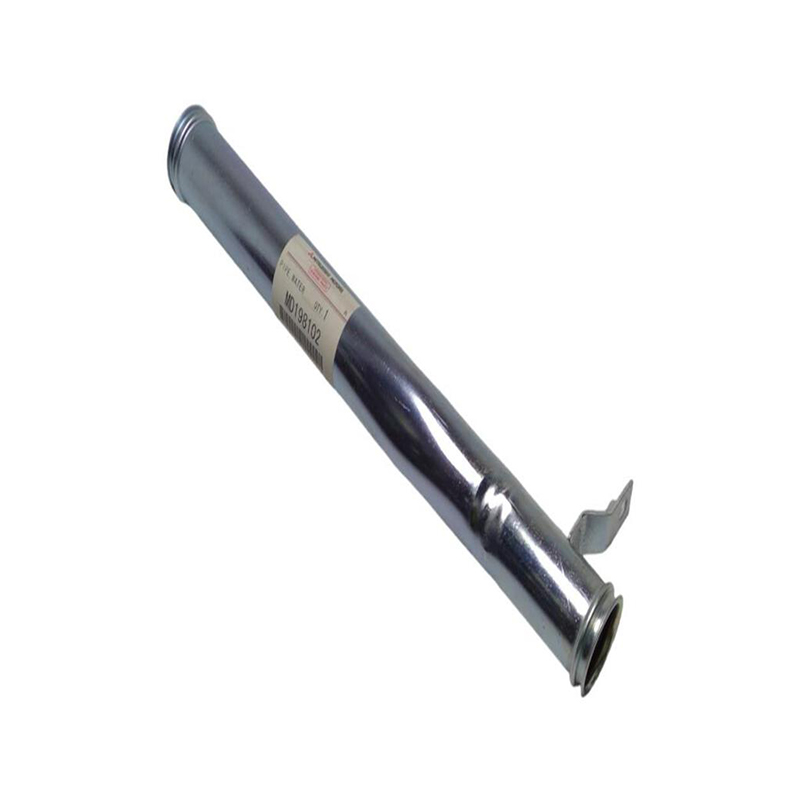
Beyond simple flexibility, the MD198102 handles extreme thermal expansion. Exhaust gases can reach temperatures exceeding 1,200°F (648°C), causing metal components to expand and contract. A high-quality flex pipe absorbs this physical growth, ensuring that the structural integrity of the entire undercarriage remains intact. For vehicle owners experiencing rattling noises or excessive cabin vibration, replacing a worn unit with a direct OEM replacement is the most effective way to restore factory-level quietness and safety.
Hidden Dangers of a Failing Exhaust Flex Pipe
A damaged flex pipe is often ignored because it starts as a faint ticking sound. However, the consequences of delayed maintenance are severe and expensive. When the MD198102 develops even a hairline fracture, it disrupts the precision-tuned backpressure required for modern internal combustion engines. This leads to a cascade of mechanical failures that can cost thousands of dollars to rectify.
Catalytic Converter and Oxygen Sensor Risks
When a flex pipe leaks, it allows "unmetered air" to enter the exhaust stream. The upstream and downstream oxygen sensors detect this extra oxygen and signal the Engine Control Unit (ECU) to pump more fuel into the cylinders. This creates a "rich" running condition that can overheat and melt the internal honeycomb structure of your catalytic converter. Replacing a converter can cost $1,200 to $2,500, whereas a timely replacement of the OE# MD198102 prevents this damage entirely.
Safety and Exhaust Fume Intrusion
Perhaps the most dangerous aspect of a failed flex pipe is the release of carbon monoxide (CO) directly under the passenger cabin. Unlike a tailpipe leak, a leak in the MD198102 occurs near the engine bay, where fumes can be drawn into the HVAC system. Ensuring a gas-tight seal with reinforced stainless steel construction is not just about noise—it is about protecting the health of everyone inside the vehicle.
Superior Construction: MD198102 vs. Economy Alternatives
Not all flex pipes are created equal. Many aftermarket "universal" pipes use a single-layer braid that quickly unravels under high pressure. The OE# MD198102 utilizes a sophisticated multi-layer design to ensure maximum durability and vibration dampening.
| Technical Feature | MD198102 OE Replacement | Standard Aftermarket Pipe |
|---|---|---|
| Material Grade | High-Grade 304 Stainless Steel | Low-Grade Galvanized Steel |
| Internal Lining | Interlock Liner (Smooth Flow) | None or Basic Braid Only |
| Vibration Absorption | Optimized for High-Frequency | Minimal Dampening |
| Fitment Type | Direct-Fit OEM Precision | Requires Cutting/Welding |
Signs Your Exhaust Flex Pipe Needs Immediate Replacement
Identifying a failing MD198102 early can save you from being stranded on the side of the road. Because the flex pipe is often the lowest point in the front exhaust section, it is frequently exposed to road salt, water, and physical impacts from speed bumps.
Common indicators include:
- A loud, rasping noise during acceleration that sounds like it is coming from under the engine.
- Noticeable vibrations in the steering wheel or seat when the vehicle is idling at a stoplight.
- A "Check Engine" light with codes related to Oxygen Sensor (O2) lean conditions or catalytic efficiency.
- Visible "fraying" or unraveling of the outer stainless steel braid upon inspection.
If you notice any of these symptoms, the MD198102 reinforced construction offers a permanent fix that restores the quiet, smooth ride you expect from your vehicle.
Why Professional-Grade Technical Support Matters
Installing an exhaust component requires precision to ensure a leak-free seal. We offer free technical support for the OE# MD198102 to assist both professional technicians and experienced home mechanics. Our support team can provide guidance on specific torque requirements for mounting bolts and tips for ensuring the pipe is perfectly aligned before the final tightening. This prevents "pre-loading" the pipe, which is a common cause of premature failure in inferior aftermarket installations.
Exhaust Flex Pipe Frequently Asked Questions (FAQ)
Can a bad MD198102 flex pipe cause poor fuel economy?
Yes. A leak in the flex pipe confuses the engine's oxygen sensors, causing the ECU to add more fuel to compensate for perceived "lean" conditions. This can decrease your miles per gallon (MPG) by as much as 10-15%.
How long does the MD198102 flex pipe usually last?
With its reinforced stainless steel construction, this pipe is designed to last 5-8 years depending on driving conditions. In dry climates, it can last even longer. This is significantly better than low-cost galvanized pipes which may rust through in 1-2 years.
Is the MD198102 a bolt-on part or does it require welding?
This is a direct OEM replacement. If your vehicle's original system uses flanges, the MD198102 is designed to bolt directly into place without the need for specialized welding equipment, making it a favorite for DIY repairs.
Will this part fix the rattling sound under my car?
If the rattle is caused by an unraveled internal liner or a cracked flex joint, then yes. Replacing the worn unit with a new MD198102 will eliminate those metallic vibrations and quiet the exhaust note significantly.
Our Main Products

 Contact Us
+86-138 0586 3066
+86-574 8840 6311
 Products
 Send An E-mail
 Mobile
Copyright ©NINGBO JIATIAN AUTOMOBILE PIPE CO.,LTD. All Rights Reserved.
 China's Premium Automotive Tube Factory
Custom Automotive Pipe Fittings Supply
privacy
China's Premium Automotive Tube Factory
Custom Automotive Pipe Fittings Supply
privacy