

 English
 Español

Can You Use Brake Line for Fuel Line? Material, Pressure, and Safety Facts
Content
- 1 The Short Answer: Steel Tubing Can Work, a Brake Line Assembly Usually Should Not
- 2 Why Brake Line and Fuel Line Are Not Interchangeable by Default
- 3 Pressure, Material, and Fitting Checks Before You Use a Brake Line for Fuel
- 4 Where a Steel Brake Line Can Work for Fuel — and Where It Cannot
- 5 A Practical Decision Path for Repair Shops and Vehicle Owners
- 6 FAQ: Brake Line and Fuel Line Questions
You can sometimes use a steel brake line as a fuel line, but not just because it fits. The tube must be compatible with gasoline or diesel, match the fuel system's pressure and flow, use the right fittings, and resist corrosion from the outside and the inside. A rubber brake hose should never carry fuel, and a fuel hose should never carry brake pressure.
The safer answer for most repairs is no: buy a line made for fuel. The exception is a custom build where you select seamless steel tubing, verify the material and wall thickness, and use fuel-compatible fittings. Here is how to tell the difference before you bend, flare, or install anything.
The Short Answer: Steel Tubing Can Work, a Brake Line Assembly Usually Should Not
In workshop language, “brake line” often means a 3/16-inch steel tube with inverted-flare nuts. That is a brake hydraulic part, not a fuel part. It may physically fit a fuel system, but its diameter, flare type, coating, and pressure rating were chosen for brake fluid. Fuel systems have different concerns: flow volume, ethanol resistance, permeation, and contamination.
Use a brake line for fuel only when the tube itself is suitable for fuel service and the whole assembly — tube, flare, fittings, clamps, and routing — meets fuel-system requirements. If you are replacing a factory line, the lowest-risk choice is an OE-style fuel line or a fuel hose rated to the correct standard.
Quick rule: do not use a rubber brake hose for fuel; do not use a fuel hose for brakes; do not use copper water pipe for either. Match the line to the fluid and the pressure.
Why Brake Line and Fuel Line Are Not Interchangeable by Default
Brake systems and fuel systems sit at opposite ends of the pressure and compatibility scale. A brake line must hold hydraulic pressure and resist brake fluid. A fuel line must carry a flammable solvent, handle pressure pulses from the pump and injectors, and avoid degradation from gasoline, ethanol blends, and diesel. The standards reflect that split: SAE J1401 and FMVSS 106 address hydraulic brake hose, while SAE J30 addresses fuel hose.
| Consideration | Brake line | Fuel line |
|---|---|---|
| Primary fluid | Hydraulic brake fluid | Gasoline, ethanol blend, or diesel |
| Typical pressure | High hydraulic pressure during braking | Low pressure on port EFI; much higher on direct injection |
| Key risk | Pressure loss and brake failure | Leak, fire, vapor lock, contamination, or flow restriction |
| Common material | Coated steel or copper-nickel brake tube | Steel fuel tube or reinforced fuel hose |
| Fitting style | Inverted flare or ISO bubble, depending on system | Flare, quick-connect, barb, or AN, depending on system |
A line that passes a brake-fluid test is not automatically a good fuel line. The reverse is also true. That is why “it fits” is not a fuel-system diagnosis.
Brake line integrity matters because a brake leak fails immediately under pressure. A fuel leak can fail quietly, soak an area with flammable liquid, and create a fire risk long before the driver notices a problem.
Pressure, Material, and Fitting Checks Before You Use a Brake Line for Fuel
Start with pressure. Port fuel injection commonly runs around 40–60 psi, while gasoline direct injection can run far higher. Brake hydraulic pressure during a hard stop is typically in the 1,000–2,000 psi range. The brake line may have a high burst rating, but that does not prove its fittings, flare, or coating are right for fuel. Pressure rating is necessary, not sufficient.
Next, check material. Bare copper tubing is a poor choice for gasoline because it can promote oxidation and form gum deposits. Copper-nickel brake line is a different alloy and is common in brake service, but fuel compatibility and local rules still need checking. Coated steel can work if the coating survives the environment and the inside of the tube is clean. Stainless steel is durable but harder to flare and may require specific fittings.
 Automotive Fuel Supply Line for Fuel Delivery SystemsMulti-layer fuel supply line designed for gasoline, diesel, ethanol and biodiesel, with leak-proof connectors and resistance to high fuel-system pressures and temperatures.View Product →
Finally, check the fitting and diameter. A 3/16-inch brake line is common for brakes, but many fuel systems use 5/16-inch, 3/8-inch, or larger tubing to supply enough volume. A restricted line can lean out the engine, overwork the pump, or create driveability faults. The flare must match the mating fitting: inverted flare, ISO bubble, AN, or quick-connect. Mixing flare types can seal on the bench and leak under vibration.
Where a Steel Brake Line Can Work for Fuel — and Where It Cannot
A steel brake line can be considered for fuel in a custom or repair situation when all of these are true: the tube is seamless and rated for fuel service; the diameter matches the engine's flow demand; the flare and fittings are correct for the fuel system; the line is protected from road debris and heat; and the installation avoids sharp bends, vibration points, and chafing. In that narrow case, the tube is being used as fuel tubing, not as a brake part off the shelf.
It cannot be used when the line is a rubber brake hose, when the flare is wrong, when the tube is copper water pipe, when the diameter is too small, or when the line will sit near exhaust heat without shielding. It also cannot be used if the fuel system is direct injection and the line is not rated for the higher pressure. A brake line that has already carried brake fluid should be discarded for fuel service; residual fluid can contaminate the fuel system.
 6L2Z18C553BA Brake Tube Assembly Direct-Fit ReplacementOE-numbered brake line with corrosion-resistant coating and factory routing, intended to restore reliable hydraulic pressure and braking system integrity.View Product →
For repairers, the practical split is simple: use fuel line assemblies for fuel, and use brake tube assemblies for brakes. Jiatian manufactures OE-replacement fuel lines, fuel injector feed pipes, and brake tube assemblies for that reason: the fitting, material, and test requirements follow the system, not the shape of the tube.
A Practical Decision Path for Repair Shops and Vehicle Owners
- Identify the fluid and the pressure. Port EFI, direct injection, return line, and brake hydraulic systems have different requirements.
- Measure the original line. Record outside diameter, wall thickness if known, flare angle, fitting thread, and routing clips.
- Check the standard. Fuel hose should carry an SAE J30 R9 or R14 marking; brake hose should meet SAE J1401 and FMVSS 106.
- Reject the wrong parts. No rubber brake hose for fuel, no fuel hose for brakes, no copper water pipe, and no mixed flare types.
- Protect the line. Use correct clips, add heat shielding near exhaust, and leave slack for vibration and thermal expansion.
- Test before driving. Pressure-test the fuel system, check for leaks with the pump running, and verify brake pedal feel if brake work was involved.
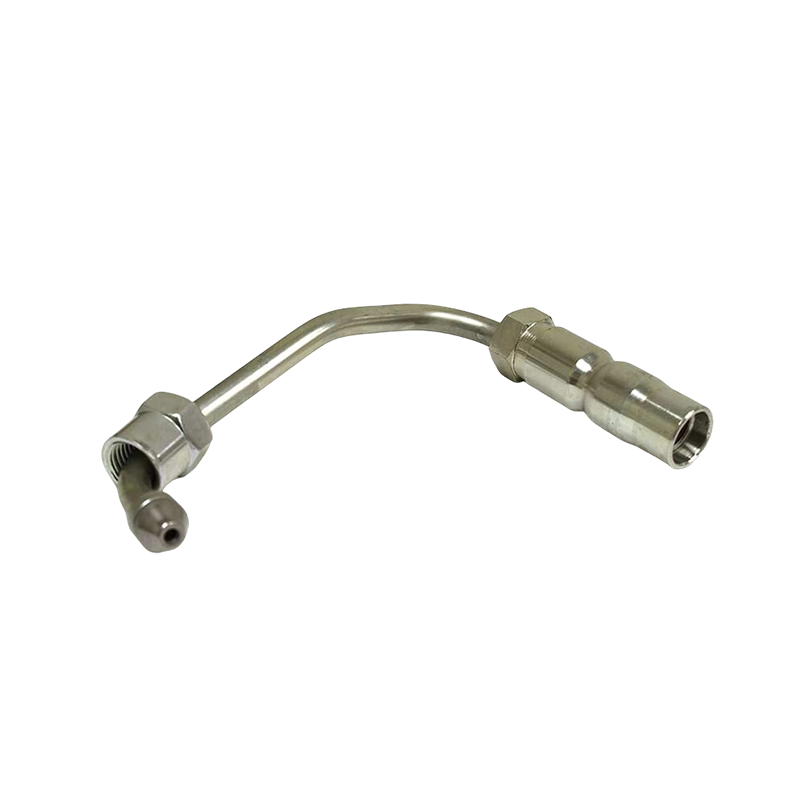 High-Pressure Fuel Injector Feed Pipe for Common Rail SystemsPrecision alloy-steel pipe delivering ultra-high-pressure fuel from common rail to injectors, with fatigue-resistant construction and stringent cleanliness controls.View Product →
If you cannot document the tube material, pressure rating, and fitting type, do not install it in a fuel system. The few dollars saved on a generic brake line are not worth a fuel leak, a fire risk, or a comeback repair.
FAQ: Brake Line and Fuel Line Questions
Q1. Can you use brake line for fuel line?
Only if the tube itself is fuel-compatible, the diameter and fittings match the fuel system, and the line is rated for the pressure. A store-bought brake line assembly usually is not the right choice.
Q2. Is a brake line the same as a fuel line?
No. They may look similar, but brake line is made for hydraulic brake fluid and brake pressure. Fuel line must resist gasoline, ethanol, or diesel and avoid flow restriction.
Q3. Can I use a rubber brake hose for fuel?
No. A rubber brake hose is not a fuel hose. Its inner liner may degrade in gasoline, and it is not designed for fuel permeation or fuel-system fittings.
Q4. What is the best fuel line material?
Use an OE-style steel fuel line or a fuel hose marked SAE J30 R9 or R14. For custom work, choose seamless steel tubing or a fuel-rated hose with the correct fittings.
Q5. Can I use copper tubing for a fuel line?
Bare copper is not a good fuel-line choice. It can promote fuel oxidation and gum formation. Copper-nickel brake line is a different alloy, but check fuel compatibility and local rules.
Q6. What happens if brake fluid gets into the fuel line?
Brake fluid can contaminate fuel, damage seals, and cause poor running. If a line has carried brake fluid, do not reuse it for fuel service. Flush or replace the affected parts.
Our Main Products

 Contact Us
+86-138 0586 3066
+86-574 8840 6311
 Products
 Send An E-mail
 Mobile
Copyright ©NINGBO JIATIAN AUTOMOBILE PIPE CO.,LTD. All Rights Reserved.
 China's Premium Automotive Tube Factory
Custom Automotive Pipe Fittings Supply
privacy