

 English
 Español

Corroded Fuel Lines: Why They Rust, Warning Signs, and OE Replacement Picks
Content
- 1 Why Corroded Fuel Lines Fail From the Inside Out
- 2 Three Zones Where Corrosion Starts
- 3 Materials and Standards That Decide How Long a Line Lasts
- 4 When Pressure Turns a Weep Into a Spray
- 5 Patch or Replace: A Rule You Can Apply in the Driveway
- 6 Fitting a Replacement Line So It Lasts
- 7 Frequently Asked Questions About Corroded Fuel Lines
- 7.1 Q1. How do I know if my fuel lines are corroded?
- 7.2 Q2. Can I keep driving with a corroded fuel line?
- 7.3 Q3. Should corroded fuel lines be repaired or replaced?
- 7.4 Q4. Do ethanol fuels make fuel line corrosion worse?
- 7.5 Q5. How much does it cost to replace a fuel line?
- 7.6 Q6. Do brake lines corrode the same way as fuel lines?
A steel fuel line that has spent ten winters in a road-salt state rarely fails all at once. It weeps first: a faint gasoline smell in the garage, a dark damp stain on the line above the fuel tank, a longer crank on cold mornings. By the time a drip reaches the floor, the wall at a clamp or a bend has usually thinned from both surfaces at the same time.
The short answer, before the detail: if a fuel line is visibly scaled, flaking, or damp, plan to replace it rather than splice it. A rated hose and two clamps will stop the drip today, but the rest of that line is the same age, made of the same steel, and exposed to the same salt and wet ethanol. What follows is where corrosion actually starts, which signs are worth acting on, the standards that decide service life, and how to fit a replacement that seals the first time.
Why Corroded Fuel Lines Fail From the Inside Out
Most owners picture a fuel line rusting from the outside in, like a fender. In practice, both surfaces corrode at once, and the inside often leads.
- Internal corrosion. Ethanol-blended gasoline absorbs water from condensation and humid air. The U.S. Energy Information Administration reports that E10 contains up to 10 percent ethanol by volume, E15 between 10.5 and 15 percent, and E85 between 51 and 83 percent. Once the fuel is saturated, phase separation drops water-rich alcohol to the bottom of the tank, which is exactly where the pickup and the steel supply line sit. Water, oxygen, and bare steel produce iron oxide scale that keeps pulling moisture further down the line.
- External corrosion. Every clamp, bracket, and plastic clip is a spot where the line's protective coating is scratched during assembly or rubbed through after years of vibration. Road salt and spray finish the job. The heaviest pitting almost always sits within an inch of a fastener, not in the middle of a straight run.
That combination is why a corroded line is easy to misjudge. Pitting moves through wall thickness rather than across the surface, so a line can look acceptable at a glance and still be close to weeping. A pressure test only proves the section that has already failed; it says nothing about the section that is about to.
Three Zones Where Corrosion Starts
Put the car on ramps with a bright light and inspect three places. On older vehicles, a corroded line nearly always shows damage at one of them.
The clamp point is where coating damage lets salt in. The low run behind the tank is where water sits against the steel. The fitting end is where vibration plus corrosion produces a crack that can open without warning. Find damage in more than one zone and the whole line is suspect.
Materials and Standards That Decide How Long a Line Lasts
Replacement lines are not interchangeable. A part that carries the right fluid at the wrong pressure or temperature will fail again, sometimes within a season.
| Material or finish | Governing standard | Corrosion behaviour | Where you see it |
|---|---|---|---|
| Coated welded steel | SAE J526 | Sound until the coating is scratched; rusts from inside with wet ethanol | Original supply lines on most 1990s and 2000s vehicles |
| Polyamide (nylon) | SAE J2260, DIN 73378 | Immune to galvanic rust; limited by heat and UV ageing | Modern OEM supply and return lines |
| 409 and 304 stainless | ASTM A269, OEM specification | Resists chloride pitting and high heat | EGR cooler pipes, turbo inlets, exhaust-side piping |
| Reinforced rubber hose | SAE J30 R9 / R10 | Ethanol-compatible liner; permeation and ageing set the limit | Flexible joints and short repair sections |
On the hot side of the engine, material choice is even less forgiving. EGR cooler pipes and turbo inlets see exhaust temperatures that will cook a rubber hose in weeks, which is why stainless grades such as 409 are specified there.
 409 Stainless EGR Cooler Pipe for Ford 6.0L PowerstrokeDirect-fit OEM replacement EGR tube in 409 stainless steel, built for high exhaust temperatures, precise routing, and leak-free installation on Ford 6.0L Powerstroke.View Product →
When Pressure Turns a Weep Into a Spray
The consequence of a corroded line scales with system pressure, and the spread between fuel systems is far wider than most drivers expect.
On a port-injected engine running 40 to 60 psi, a pinhole weeps and usually announces itself with a smell. On a gasoline direct-injection engine at 2,000 psi or more, the same pinhole becomes a fine mist; on a common-rail diesel at 23,000 psi and above, a crack can cut through a hose or skin in an instant. Corrosion on a high-pressure line is never a wait-and-see item.
Injector feed pipes add another constraint. They are length- and stiffness-matched to damp pressure pulses, so a mismatched replacement can cause rough running even when it seals perfectly.
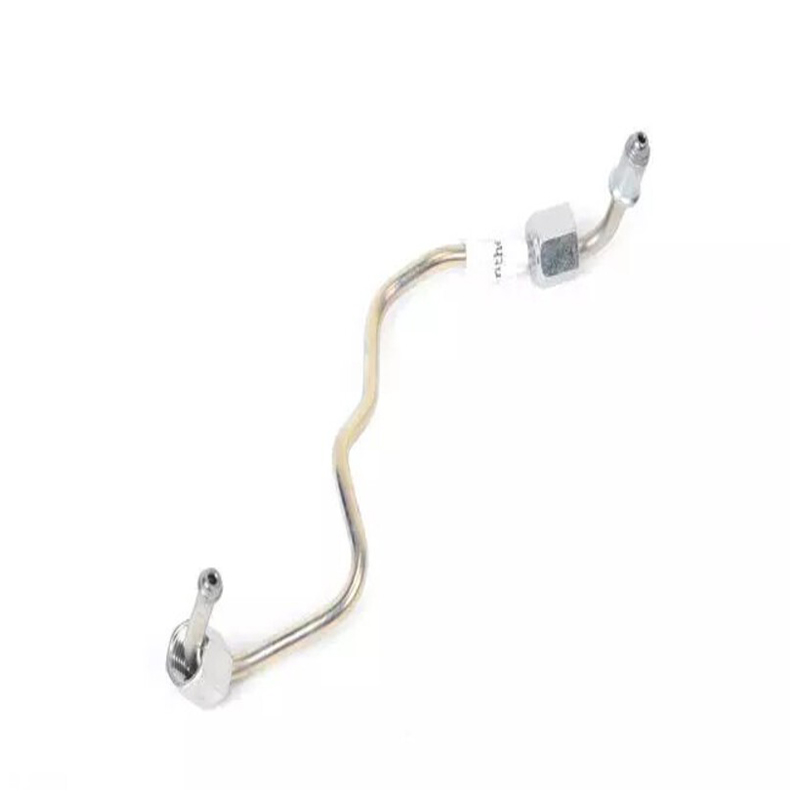 High-Pressure Fuel Injector Line OE 98063063 ReplacementDirect-fit replacement feed pipe for high-pressure diesel injection, intended to restore precise fuel delivery, prevent leaks, and maintain engine performance where pulse damping matters.View Product →
Patch or Replace: A Rule You Can Apply in the Driveway
Cutting out a rusted section and joining the gap with ethanol-rated fuel hose and two clamps is a legitimate emergency repair on a low-pressure line, provided the cut is square, the steel is flared so the hose cannot pull off, and the hose meets SAE J30 R9 or R10. It is not a fix, and it is not acceptable everywhere.
Replace the line instead of patching it when you find any of the following:
- Corrosion at more than one point along the same line
- Damage within an inch of a fitting, flare, or bend
- Any line on a direct-injection gasoline or common-rail diesel engine
- Lines that are damp or weeping while the system is pressurised
- Layered, flaking scale rather than light surface discolouration
A pre-bent replacement fuel line assembly matched to the original equipment number avoids the measuring, flaring, and guessing that bulk tubing requires, and it keeps the routing that the factory designed for heat and chafe clearance.
 Pre-Bent Fuel Supply Line Assembly for OEM ApplicationsReplacement fuel line assembly for corrosive fuels and complex routing, avoiding bulk-tubing fabrication while supporting leak-free, emissions-compliant fuel delivery.View Product →
Fitting a Replacement Line So It Lasts
Installation quality decides whether the new line outlives the old one. A few habits matter more than torque figures.
- Relieve fuel pressure before opening any fitting, and work with the battery disconnected on a cold engine.
- Match the flare type exactly. An ISO bubble flare and a 45-degree double flare are not interchangeable, and forcing one is how leaks start.
- Replace the clamps, not just the line. Rubber-lined or coated clamps stop the galvanic contact that started the problem.
- Never use a compression fitting on a high-pressure fuel line.
- Keep the line off exhaust shielding and away from direct salt spray, then pressurise the system with the engine off and check every joint before driving.
For a closer look at how joints fail and how to avoid it, the guide on preventing leaks at pipe fittings is worth ten minutes before you start.
preventing leaks at pipe fittingsFrequently Asked Questions About Corroded Fuel Lines
Q1. How do I know if my fuel lines are corroded?
Look for flaking or layered scale, a damp film on the tube, a gasoline smell after the car sits, and hard cold starts. Corrosion usually appears within an inch of a clamp, bracket, or fitting rather than in the middle of a straight run.
Q2. Can I keep driving with a corroded fuel line?
Driving on a weeping low-pressure line is risky, and driving on a corroded high-pressure line is not worth the gamble. A pinhole on a direct-injection gasoline or common-rail diesel system can turn into a mist that ignites on a hot manifold.
Q3. Should corroded fuel lines be repaired or replaced?
Replace the line if corrosion shows at more than one point, near a flare or bend, or anywhere on a high-pressure system. A hose-and-clamp patch is an emergency measure for a low-pressure line only.
Q4. Do ethanol fuels make fuel line corrosion worse?
Indirectly, yes. Ethanol blends absorb water, and once the fuel is saturated, water-rich alcohol separates and settles at the bottom of the tank where the steel pickup line sits. E10 carries up to 10 percent ethanol, while E85 can reach 83 percent.
Q5. How much does it cost to replace a fuel line?
The part is rarely the expensive half. Access drives the bill, because dropping a tank or removing an intake can take longer than the line itself. Ask for a quote that separates the part, the labour, and any tank or intake work.
Q6. Do brake lines corrode the same way as fuel lines?
Yes. Brake lines are usually coated steel and corrode from the same salt and moisture exposure, often in the same locations. Because a brake line failure removes braking force instead of merely causing a leak, any corroded brake tube or brake tube assembly should be replaced without delay.
Our Main Products
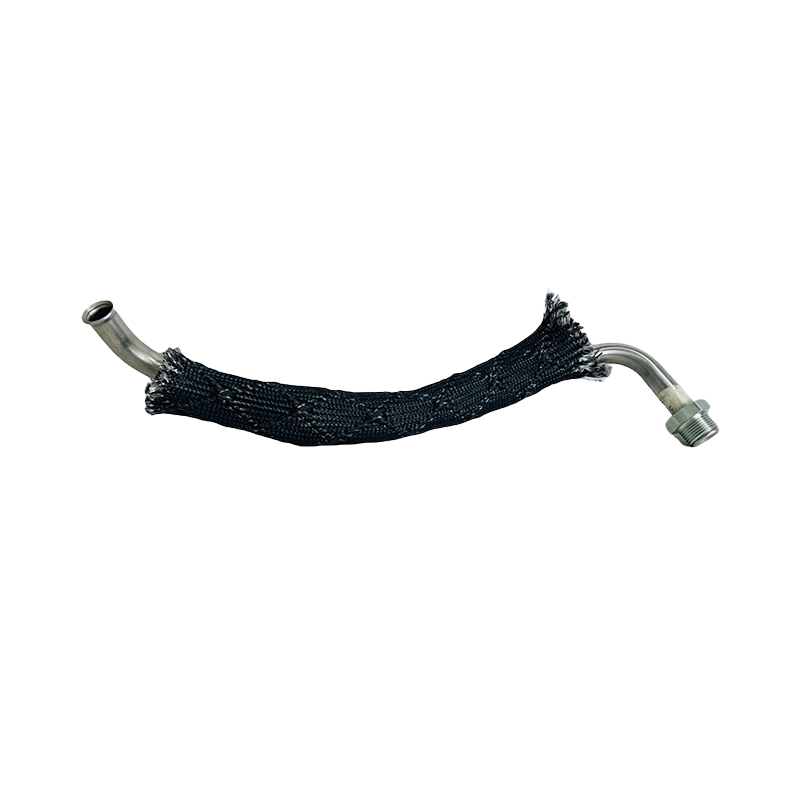
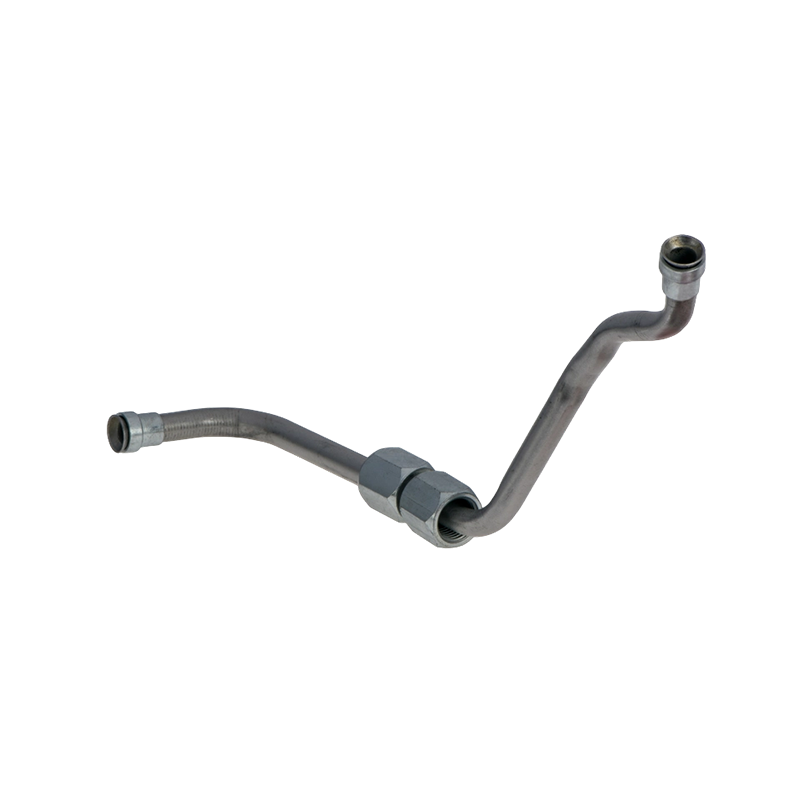

 Contact Us
+86-138 0586 3066
+86-574 8840 6311
 Products
 Send An E-mail
 Mobile
Copyright ©NINGBO JIATIAN AUTOMOBILE PIPE CO.,LTD. All Rights Reserved.
 China's Premium Automotive Tube Factory
Custom Automotive Pipe Fittings Supply
privacy