

 English
 Español

How to Choose a Fuel Pipe: Materials, Specifications and Supplier Checks
Content
- 1 What a Fuel Pipe Actually Has to Do
- 2 Steel, Stainless, Rubber, PTFE or Nylon: Choosing the Material
- 3 Specifications to Confirm Before the Order
- 4 How a Rigid Fuel Pipe Is Produced
- 5 Leak Testing and Quality Control
- 6 Fitment and Installation: Where Comebacks Come From
- 7 Evaluating a Fuel Pipe Manufacturer
- 8 What Drives the Price of a Fuel Pipe
- 9 Frequently Asked Questions
- 9.1 Q1. What is the difference between a fuel pipe and a fuel line?
- 9.2 Q2. Can a leaking steel fuel pipe be replaced with rubber hose?
- 9.3 Q3. How do I identify the correct fuel pipe for a vehicle?
- 9.4 Q4. What pressure must a fuel pipe withstand?
- 9.5 Q5. Is the pipe compatible with ethanol-blended fuel?
- 9.6 Q6. What are the MOQ and lead time?
When a distributor sends an inquiry for a fuel pipe, the reply that actually helps them is rarely a price. It is a request for the OE number, the engine code and a photo of the failed part. Two vehicles that look identical in a parts catalog can carry different fuel supply lines because of an engine change mid-year, a different tank or evaporative setup, or a running update to the connector at one end. A pipe that is beautifully made but 20 mm short at the bend will leak, chafe or refuse to clip into place.
This guide is written for importers, workshop chains and parts buyers who source fuel pipes in volume. It covers what the part has to do, how material choice changes both performance and landed cost, which specifications belong on a purchase order, and how to judge whether a manufacturer can repeat the same result across a thousand pieces.
What a Fuel Pipe Actually Has to Do
A fuel pipe moves liquid fuel or fuel vapor between the tank, the pump module, the filter, the rail and the injectors. That sounds simple until you list the conditions: constant pressure, engine and chassis movement, road spray, de-icing salt, radiant heat from the exhaust and, on modern engines, ethanol-blended fuel that attacks the wrong elastomer.
Field failures cluster into three groups:
- Joint leaks at a flare, O-ring port or quick-connect, usually caused by damaged sealing surfaces or a reused single-use clip.
- Corrosion from the outside in, which starts wherever the coating was thinned, scratched or cracked — most often on the outside radius of a bend.
- Fatigue cracking from an unsupported length, a hose that pulls the rigid line out of alignment, or a bracket that was never refitted after a repair.
All three are decided by design and process control, not by final inspection. That is why the specification conversation matters more than the price per piece.
Steel, Stainless, Rubber, PTFE or Nylon: Choosing the Material
System pressure and position on the vehicle define the material before anyone discusses cost. A rigid line under the floor pan faces stone impact and salt; a short flexible section at the engine faces vibration and heat; a vapor line faces permeation limits.
| Material | Typical position | Strengths | Watch-outs |
|---|---|---|---|
| Welded low-carbon steel tube, coated (SAE J526 / J527 type) | Underbody supply and return lines | High burst strength, resists impact and abrasion, bends accurately on CNC equipment | Service life depends on the coating; a scratched bend is where corrosion begins |
| Stainless steel tube (304 / 409) | Hot zones near turbochargers, EGR and exhaust | Heat and corrosion resistance, long service life | Higher material and tooling cost, thread galling at fittings |
| Reinforced rubber hose (SAE J30 R9 / R14 class) | Joints between rigid line and engine, tank connections | Absorbs vibration and misalignment, easy routing | Permeation and aging; the wrong compound shortens life with ethanol fuel |
| PTFE-lined hose | High-pressure, high-temperature and aggressive-fuel connections | Chemical inertness, very low permeation | Crimp quality decides everything; not a field-serviceable part |
| Multilayer nylon or plastic tube | Tank, evaporative vapor lines, low-pressure return | Light, low permeation, economical at volume | Limited tensile strength and heat resistance; needs the correct quick-connect |
For most underbody replacement work, coated steel remains the default because it matches what the vehicle was built with and survives the environment. The detail that separates suppliers is the coating system — polyvinyl fluoride, zinc-aluminum, epoxy or nylon — and how well that layer stays intact after bending. Form a coated tube with the wrong mandrel and the coating thins on the outside radius: invisible at packing, obvious as rust two winters later.
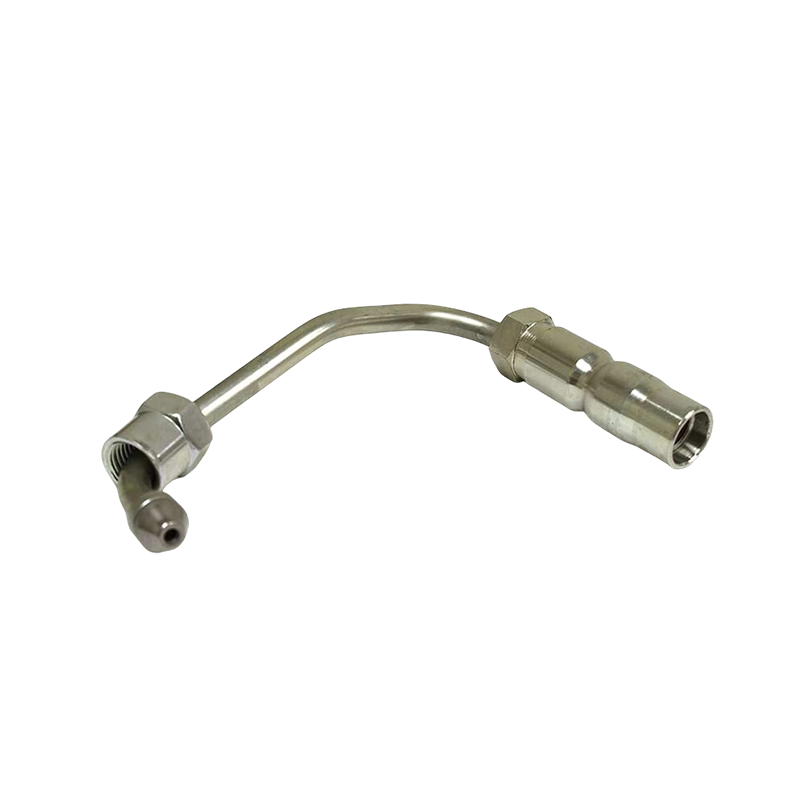
 Automotive Fuel Supply Line for Corrosive FuelsMulti-layer fuel supply line designed for gasoline, diesel, ethanol and biodiesel, with leak-proof connectors and high-pressure, high-temperature resistance for underbody replacement work.View Product →
Specifications to Confirm Before the Order
A purchase order that reads "fuel pipe, steel, for 6.0L" invites a wrong shipment. The fields below are what a competent supplier will ask you for, or should already be asking.
| Field | Why it matters |
|---|---|
| Material grade and standard | SAE J526 welded low-carbon steel and SAE J527 brazed double-wall tubing behave differently in bending and burst; the callout also defines which mill certificate you should receive. |
| Tube OD and wall thickness | Wall thickness drives burst margin and how much the tube ovalizes at a tight bend. |
| Coating and corrosion target | State the coating type plus a salt spray target under ISO 9227, so the requirement is testable instead of descriptive. |
| Working and minimum burst pressure | Low-pressure port injection and direct injection sit in completely different ranges. Never assume a universal figure. |
| Temperature range | Lines routed near the exhaust or turbo need a tube, coating and elastomer rated for that zone. |
| End form and connector | Flare, O-ring port, banjo or quick-connect (SAE J2044 style); the clip and O-ring material must match the fuel. |
| Geometry and check fixture | 3D CAD plus a go/no-go checking fixture is how a supplier proves bend accuracy order after order. |
| Marking and traceability | OE number, batch and date code make the difference between isolating a problem and recalling a container. |
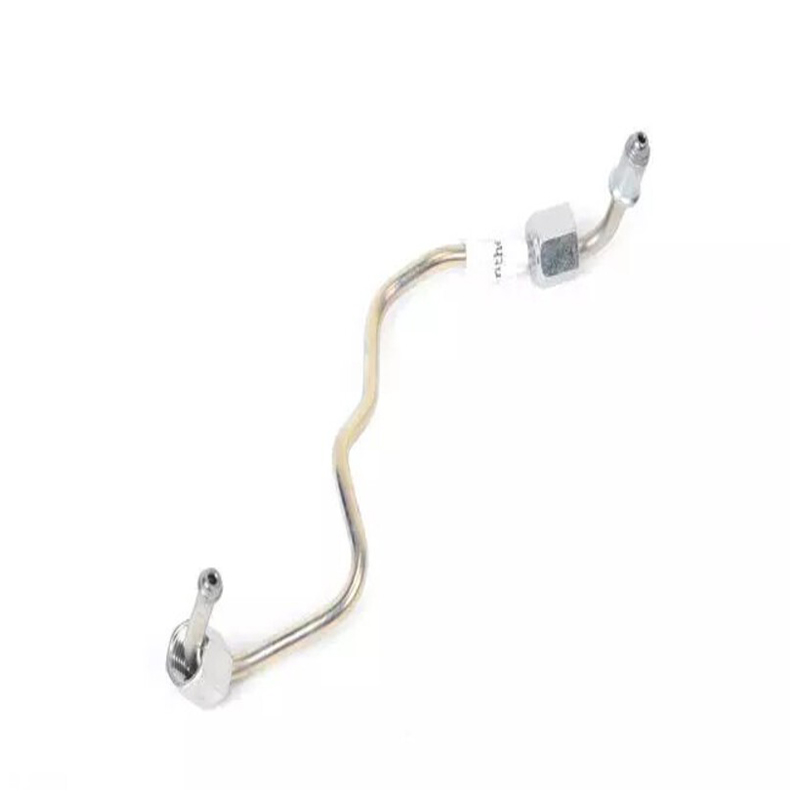
 Precision Fuel Injector Feed PipeAlloy-steel injector feed pipe with cold-drawn strength, autoclaving prestress and ultrasonic cleanliness, built for high-pressure fuel delivery and fatigue resistance.View Product →
How a Rigid Fuel Pipe Is Produced
Bend accuracy is where most quality arguments start, and most of it is settled before the first part reaches a measuring fixture.
Illustrative diagram: process sequence for rigid coated fuel pipe
Springback is the quiet variable. Every tube grade and wall thickness springs back a different amount once the bending mandrel releases, so the machine program has to be compensated against the actual coil rather than the nominal drawing. Suppliers who re-qualify the bend program for each material lot deliver parts that drop into the check fixture; those who do not deliver parts that "almost fit".
Brackets, mounting tabs and fittings are joined by brazing or welding. Brazing keeps heat input low, which suits coated tube, but joint strength depends on filler alloy, joint clearance and furnace atmosphere. Laser welding gives a narrow heat-affected zone on stainless assemblies where distortion would ruin the geometry.
Coating comes after forming for one reason: any forming step after coating damages the barrier. Form, clean, coat, cure, inspect — that sequence is worth confirming when a quotation looks unusually low.
Leak Testing and Quality Control
Ask how the part is tested, not whether it is tested. A control plan for fuel pipe usually covers:
- Pressure decay or helium leak testing on 100% of assemblies, with a reject limit written into the plan.
- Burst testing on a sampling basis, recorded against the drawing minimum.
- Salt spray to the agreed ISO 9227 hours, with coating thickness measured before and after bending.
- Dimensional audit on a checking fixture at a defined frequency, plus first-article inspection for every new tool.
- Tube mill certificates retained by heat number, matched to production batches.
An in-house laboratory shortens the loop between a problem and an answer. When a batch fails leak testing, the real question is whether the fault sits in the flare, the braze or the tube itself — and that answer should not require shipping samples to a third party and waiting three weeks.
Fitment and Installation: Where Comebacks Come From
Most "bad part" complaints on fuel pipes are fitment errors with a plausible story attached:
- Matching by vehicle year and model instead of the OE number, ignoring mid-year running changes.
- Reusing the old quick-connect clip or O-ring, which are single-use items on many applications.
- Pulling a rigid line into alignment with the bracket bolt instead of aligning the bracket to the line.
- Hand-bending a coated tube to "make it fit", which cracks the coating exactly where corrosion will start.
- Skipping the pressure check after installation and calling a slow seep assembly lubricant.
For buyers who need a closer look at connector-level behaviour, this guide on choosing the right fuel injector pipe for your engine explains the joint details behind most seepage complaints.
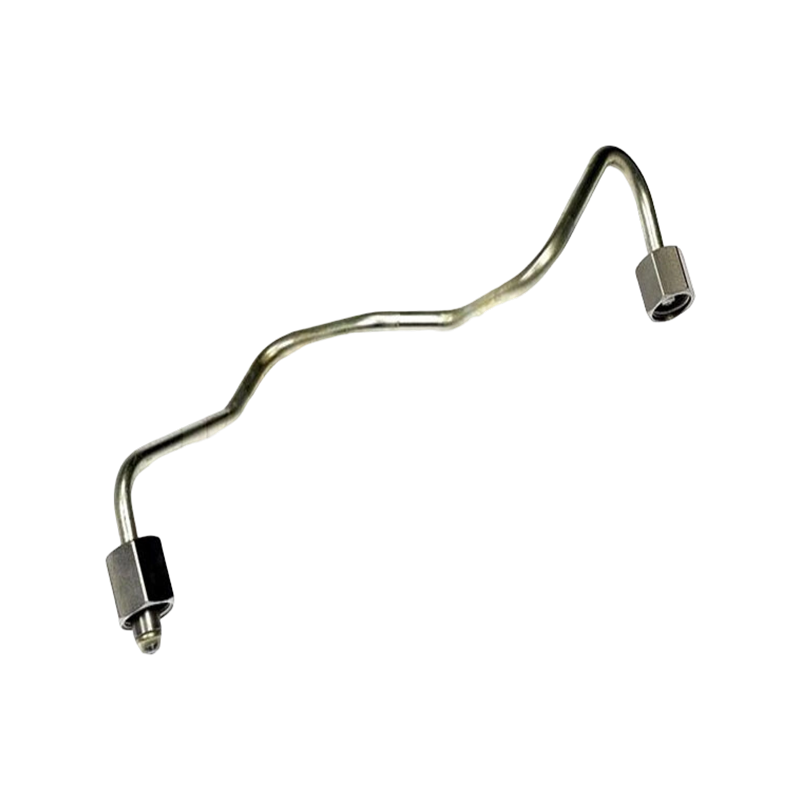
 OE 98063063 Fuel Injector Feed LineDirect-fit replacement injector line for high-pressure diesel systems, manufactured to OEM specifications to restore precise fuel delivery, leak prevention and engine performance.View Product →
Evaluating a Fuel Pipe Manufacturer
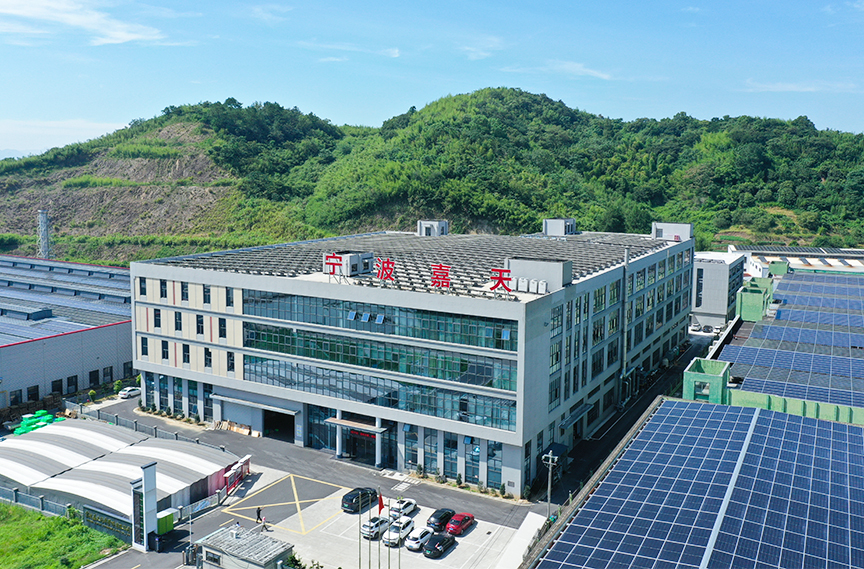
An equipment list shows what a factory can make; process discipline shows whether it can make the same part again next quarter. At Ningbo Jiatian Automobile Pipe Co., Ltd, production runs on CNC bending machines, hydraulic internal forming equipment and an 800-ton hydroforming press, supported by brazing furnace lines, laser welding cells, robotic welding and machining centers for end forms and fittings. A 26,000 m² workshop and an in-house laboratory back both OE-replacement programs and custom development, including OEM and ODM work where the drawing, connector and coating system come from the customer.
Questions worth putting in writing before a trial order:
- Which operations are performed in-house and which are subcontracted?
- Can you supply first-article inspection reports, material certificates and a control plan with the submission package?
- How is the bend program re-validated when the tube supplier or coil lot changes?
- What is the sample lead time for a new part number, and who owns the tooling?
The wider fuel line range shows how these questions apply across supply, return and vapor lines rather than a single part number.
What Drives the Price of a Fuel Pipe
- Tube grade and wall thickness — stainless and heavier walls cost more per meter and more to form.
- Coating system — a zinc-aluminum or PVF line costs more than basic paint, and it is the layer that decides service life.
- End forms and joints — every flare, braze and welded bracket adds an operation and a test point.
- Tooling amortization — spread across 500 pieces or 50,000, the per-unit figure changes completely.
- Testing and documentation — full traceability and approval-level paperwork carry a real cost that should never be hidden.
A quote that lands far below the field usually removes one of those five items. Ask which one, and ask for the specification that replaced it.
Frequently Asked Questions
Q1. What is the difference between a fuel pipe and a fuel line?
Fuel line is the general term for any hose or tube carrying fuel. Fuel pipe usually refers to the rigid metal tube, while the flexible connections at each end are described as hoses or line assemblies.
Q2. Can a leaking steel fuel pipe be replaced with rubber hose?
Only where the system is low pressure and the routing allows it, and never as a substitute for a high-pressure or load-bearing line. Rubber permeates and chafes, and improvised hose on a pressurized supply line is a fire risk. Replace rigid tube with rigid tube.
Q3. How do I identify the correct fuel pipe for a vehicle?
Start with the OE number from the original part or the dealer parts diagram, then confirm engine code, model year and any running change. A photo of the failed part next to a ruler settles most remaining doubt.
Q4. What pressure must a fuel pipe withstand?
It depends on the injection system. Port injection runs at low pressure, while direct injection lines on the high-pressure side operate in a completely different range. Specify working pressure and burst margin rather than assuming a universal figure.
Q5. Is the pipe compatible with ethanol-blended fuel?
Steel and PTFE are generally unaffected. Elastomer parts — O-rings, seals and rubber hose — are where compatibility has to be confirmed. State the ethanol content you expect and ask for the elastomer specification in writing.
Q6. What are the MOQ and lead time?
Both depend on whether the part is an existing OE-replacement number or a new development that needs tooling. MOQ, sample timing and delivery are quoted per part number, so confirm them against your actual order.
If you are working from an OE number and need a specification match, send the drawing or the original part details to the manufacturer and ask for a dimensioned proposal before committing to volume. That conversation usually settles material, coating and connector questions faster than any catalog page.
Our Main Products

 Contact Us
+86-138 0586 3066
+86-574 8840 6311
 Products
 Send An E-mail
 Mobile
Copyright ©NINGBO JIATIAN AUTOMOBILE PIPE CO.,LTD. All Rights Reserved.
 China's Premium Automotive Tube Factory
Custom Automotive Pipe Fittings Supply
privacy