

 English
 Español
How to Choose the Right Fuel Injector Line for Automotive Applications?
Content
- 1 Selecting the Right Automotive Fuel Injector Line Comes Down to Four Factors
- 2 What a Fuel Injector Line Actually Does in the Fuel System
- 3 Common Materials Used in Fuel Injector Lines and How They Compare
- 4 Matching Pressure Ratings to the Injection System in Use
- 5 Fuel Line Fitting Types and Connection Methods for a Secure Seal
- 6 Diameter, Wall Thickness, and Length Considerations for Injector Line Selection
- 7 Routing, Clearance, and Vibration Protection During Installation
- 8 Recognizing Wear, Leaks, and Performance Issues Over Vehicle Mileage
- 9 Maintenance Practices That Help Extend Injector Line Service Life
- 10 Manufacturing Practices Behind Durable Fuel Injector Line Production
- 11 Frequently Asked Questions About Automotive Fuel Injector Lines
Selecting the Right Automotive Fuel Injector Line Comes Down to Four Factors
The right automotive fuel injector line is the one that matches the operating pressure of the fuel delivery system, uses a material suited to the fuel type and under-hood environment, connects through a fitting style suited to the injector and rail, and is sized correctly for diameter, wall thickness, and routing length. Getting any one of these variables wrong tends to shorten service life and can lead to uneven fuel delivery at the injector tip over time.
On a gasoline multiport engine, a fuel line rated for low to moderate pressure with a corrosion resistant coating is generally sufficient for the injector feed segment. On a gasoline direct injection or diesel common rail engine, the injector line between the rail or pump and each injector has to withstand pressures that sit an order of magnitude higher, which calls for cold worked steel tubing rather than a standard hose assembly. The sections below walk through each selection factor in more detail, along with reference charts that show how these variables compare across common engine platforms.
What a Fuel Injector Line Actually Does in the Fuel System
A fuel injector line is the section of tubing that carries pressurized fuel from the pump or common rail to the injector nozzle at each cylinder. Within the broader gas line in car network, it sits at the very end of the delivery path, after the tank line, filter line, and supply line, and just before the point where fuel is metered and atomized into the intake port or combustion chamber. Because it operates closest to the injector, this segment experiences the sharpest pressure pulses in the entire fuel circuit.
Auto fuel lines are often grouped together in everyday conversation, but the injector line itself is a distinct component from the tank to pump line or the return line. It has to tolerate rapid pressure pulsation created every time an injector opens and closes, in some cases hundreds of times per second across the engine speed range, while staying tight enough to prevent even minor seepage at the connection points.
Why the Injector Line Segment Gets Extra Engineering Attention
Unlike a length of general purpose fuel hoses, an injector line typically needs a rigid or semi rigid wall construction so it holds its shape against the injector body under vibration. In many parts catalogs, an fuel line of this type is listed under fuel delivery hardware alongside its matching fittings, clamps, and mounting clips, since all of these parts work together to keep the connection sealed through repeated pressure cycling.
Common Materials Used in Fuel Injector Lines and How They Compare
Four material families cover most of the automotive fuel injector line market: stainless steel, cold worked steel alloy, nylon, and composite or reinforced polymer tubing. Each one balances pressure tolerance, corrosion resistance, and flexibility differently, which is why engine designers rarely use the same material for the low pressure supply side and the high pressure injector side of the same system.
Material Snapshot for Fuel Injector Line Selection
| Material | Typical Pressure Class | Corrosion Resistance | Flexibility | Common Application |
|---|---|---|---|---|
| Stainless steel | High pressure common rail segment | High | Low | Diesel and GDI injector feed lines |
| Steel alloy, cold worked | High pressure common rail segment | Moderate to high | Low | Diesel common rail injector pipes |
| Nylon | Low to moderate pressure | High | High | Supply, return, and vapor lines |
| Composite, reinforced | Moderate pressure | Moderate to high | Moderate | Mid pressure feed and jumper lines |
Stainless steel and cold worked steel alloy dominate the high pressure segment because both can go through autofrettage, a cold working step that presses the inner wall past its yield point and leaves behind a layer of residual compressive stress. That residual stress offsets the tensile stress created during each injection pressure pulse, which is one reason a properly processed steel injector line can handle pressures well above 200 MPa in a diesel common rail application without early fatigue cracking.
Matching Pressure Ratings to the Injection System in Use
Pressure class is the first filter to apply when narrowing down a fuel line option. A line built for a low pressure gasoline supply circuit is not a substitute for the segment feeding a common rail injector, and using the wrong class in either direction either wastes durability margin or creates a genuine reliability risk.
Typical Operating Pressure by System Type
The high pressure diesel common rail injector line is the segment that receives the most engineering attention because it must resist both extreme static pressure and rapid pulsation. Direct injection gasoline systems sit in between, needing a pipe that can handle double digit MPa figures without the wall thickness of a diesel line. Understanding which bracket a vehicle falls into is the fastest way to shortlist a compatible fuel injector line before looking at material or fitting details.
Fuel Line Fitting Types and Connection Methods for a Secure Seal
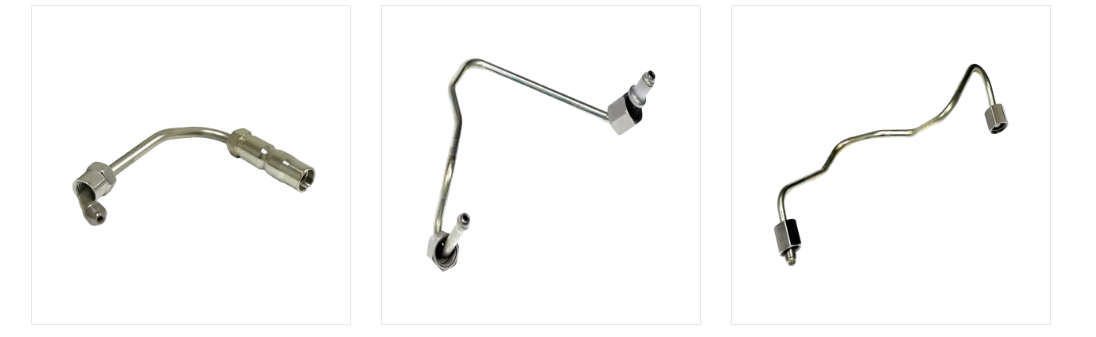
Fuel lines and fittings work as a single system rather than as separate purchases, since a tube that is otherwise correctly rated can still leak if paired with a mismatched connector. Automotive fuel injector line assemblies typically use one of a handful of proven connection styles, chosen based on pressure class, tube material, and how often the joint needs to be serviced.
Types of Fuel Line Connections Found on Modern Vehicles
- Flare fittings form a metal to metal seal using a flared tube end pressed against a matching cone, commonly used on steel injector lines that see high pressure.
- Compression fittings rely on a ferrule that bites into the tube wall as the nut is tightened, useful where a line needs to be joined without flaring the tube end.
- Quick connect fittings snap together and are widely used on nylon supply and return lines where fast assembly and disassembly matter during service work.
- Banjo fittings use a hollow bolt style connector that allows the line to sit at a fixed rotational angle, often found at the injector inlet where space is tight.
- Push on barb fittings pair with reinforced fuel hoses in lower pressure sections of the circuit and are typically secured with a clamp.
- Threaded compression nuts are used at the injector and rail ports on high pressure steel lines, torqued to a set specification during assembly.
Automotive Hoses and Fittings Working Together
In practice, automotive hoses and fittings for auto fuel lines combine rigid tubing sections with short flexible hose runs where vibration isolation is needed between the engine and chassis. Fuel line fitting types differ between original equipment style connectors and generic aftermarket designs, so the safest approach when sourcing a replacement fuel line connector type is to match the thread pitch, tube outer diameter, and sealing method of the original part rather than assuming interchangeability across engine families.
Diameter, Wall Thickness, and Length Considerations for Injector Line Selection
Outer diameter and wall thickness scale with both pressure class and injector flow requirement. A larger displacement or heavy duty diesel engine moves more fuel per cycle, so its injector line typically needs a wider bore to keep flow velocity and pressure drop within an acceptable range, while the wall still needs to grow thicker to manage the higher working pressure.
Length matters as much as diameter. A run that is longer than necessary adds pressure drop and extra mass that must be clamped and supported, while a run that is too short strains the fittings at both ends once the engine settles under its own mounts. Following the original tube length and bend geometry, or a properly measured replacement, keeps the line free of unwanted tension at the injector and rail connections.
Routing, Clearance, and Vibration Protection During Installation
Correct routing protects a fuel injector line from two of its most common failure triggers: heat and chafing. A line that runs close to the exhaust manifold ages faster than one routed along the cooler side of the engine bay, and a line that rubs against a bracket or wiring harness will eventually wear through its outer wall.
- Follow the original routing path and clip locations so the line keeps its designed clearance from moving parts and hot surfaces.
- Keep a visible gap between the tube and any exhaust component, adding a heat shield section where the factory layout includes one.
- Space mounting clips at even intervals so the tube cannot flex enough to contact adjacent hardware during engine movement.
- Avoid bending steel tubing tighter than its rated minimum bend radius, since a sharp bend thins the wall and concentrates stress.
- Check torque at every fitting after the first heat cycle, since thermal expansion can slightly loosen a joint that was tightened cold.
Recognizing Wear, Leaks, and Performance Issues Over Vehicle Mileage
Fuel injector line wear tends to build gradually rather than appearing all at once, which is why periodic visual inspection catches most problems before they affect drivability. The chart below illustrates how the share of inspected lines showing some form of wear typically climbs as mileage accumulates.
A fuel injector line rarely fails without warning signs. A faint fuel smell near the engine bay, a visible damp residue along the tube, a rough idle that was not present before, or a small drop in fuel pressure readings during diagnostics are all reasons to inspect the line and its fittings before the issue affects starting or acceleration.
Maintenance Practices That Help Extend Injector Line Service Life
Most of the practices that protect a fuel injector line are simple and low effort, which makes them easy to fold into a routine service visit rather than treating them as a separate task.
- Wipe down the line and fittings during oil changes and look for a dull, tacky film that indicates a slow seep.
- Check mounting clips for cracking or looseness, since a line that can move is a line that will eventually chafe.
- Keep the engine bay free of debris buildup around the line, since trapped moisture and road grit accelerate surface corrosion.
- Replace worn clamps and gaskets at the same time as any fitting that is disturbed during unrelated repair work.
- Confirm fuel filter service intervals are being followed, since particulate contamination can accelerate wear inside the injector line and at the injector itself.
Manufacturing Practices Behind Durable Fuel Injector Line Production
The performance differences described above come from how a fuel injector line is manufactured, not just the raw material it starts from. High pressure injector pipes are typically formed from specially selected low alloy steel tubing, then heat treated and cold worked to raise yield strength and fatigue resistance so the finished tube can handle the pressure pulsation of a diesel common rail system.
Autofrettage processing, where the tube is pressurized beyond its normal working range during manufacturing, creates a layer of residual compressive stress on the inner wall that works against the tensile stress generated during operation. Precision CNC tube bending is then used to shape each line so its three dimensional geometry lines up with the engine layout, which keeps installation straightforward and avoids added stress at the mounting points.
Production facilities that specialize in this category, such as JIATIAN in Ningbo, combine CNC pipe bending equipment, hydraulic forming lines, automated laser welding, and dedicated testing areas to keep dimensional accuracy and wall integrity consistent from one production run to the next. This kind of integrated process, from tube forming through to final geometry checks, is what allows a fuel injector line to be produced to a repeatable standard across large order volumes as well as smaller custom runs.
Frequently Asked Questions About Automotive Fuel Injector Lines
|
Q1: What Is a Fuel Injector Line A fuel injector line is the tubing segment that carries pressurized fuel from the pump or common rail to the injector at each cylinder, forming the final link in the fuel delivery path. |
Q2: What Does a Fuel Injector Line Do It transfers fuel under pressure to the injector while withstanding the rapid pressure pulses created every time the injector opens and closes during engine operation. |
|
Q3: Where Is the Fuel Injector Line Located It runs between the fuel rail or high pressure pump and the injector body, usually along the top or side of the engine near the intake manifold. |
Q4: What Materials Are Fuel Injector Lines Made Of Common options include stainless steel, cold worked steel alloy, nylon, and composite materials, each suited to a different pressure and flexibility need. |
|
Q5: What Is the Difference Between a Fuel Injector Line and a Fuel Rail The fuel rail is the shared manifold that distributes pressurized fuel to each cylinder, while the injector line is the individual segment connecting the rail or pump to a single injector. |
Q6: How Do I Know if My Fuel Injector Line Is Bad Signs include a visible fuel smell, damp residue along the tube, an unexplained rough idle, or a drop in measured fuel pressure during a diagnostic check. |
|
Q7: What Causes Fuel Injector Line Leaks Typical causes include loose or worn fittings, chafing from poor clearance to nearby parts, surface corrosion, and fatigue cracking after extended pressure cycling. |
Q8: Can a Damaged Fuel Injector Line Affect Engine Performance Yes, a damaged line can cause uneven fuel pressure at the injector, leading to rough idle, hesitation, or reduced power depending on the severity of the issue. |
|
Q9: How Often Should Fuel Injector Lines Be Replaced There is no single fixed interval, since service life depends on mileage, routing, and operating conditions, which is why periodic visual inspection is recommended over a strict calendar based schedule. |
Q10: How to Prevent Fuel Injector Line Corrosion Keep the engine bay free of trapped moisture and debris, address any protective coating damage promptly, and choose a material suited to the local operating environment. |
Our Main Products

 Contact Us
+86-138 0586 3066
+86-574 8840 6311
 Products
 Send An E-mail
 Mobile
Copyright ©NINGBO JIATIAN AUTOMOBILE PIPE CO.,LTD. All Rights Reserved.
 China's Premium Automotive Tube Factory
Custom Automotive Pipe Fittings Supply
privacy
China's Premium Automotive Tube Factory
Custom Automotive Pipe Fittings Supply
privacy