

 English
 Español
Fuel Line Sizes Explained: How to Choose Metric vs. Inch, ID vs. OD, and More
Content
Picture this: you are replacing a perished fuel hose on a project car. At the parts counter, the clerk asks the same question a dozen people asked that morning — 5 mm, 5.5 mm, 1/4 inch, 5/16 inch, or 3/8 inch? The answer is controlled by one number: the inner diameter (ID) of the hose must match the metal fitting it slides onto, or be a few tenths of a millimetre smaller for a secure clamp seal. Get it right and fuel flows without starvation or leaks. Get it wrong and the car runs lean, idles rough, or drips fuel onto a hot exhaust. This guide explains what fuel line sizes actually mean, how to measure them, and how metric and inch sizes compare so you can buy the correct hose the first time.
Why Fuel Line Size Matters
An undersized fuel line acts like a kink. It adds flow restriction, which lowers pressure at the carburetor or fuel rail. The engine runs lean, hesitates under load, and may misfire; exhaust temperatures climb and fuel economy drops. An oversized fuel line has the opposite failure mode: the hose wall no longer compresses onto the barb, so the clamp pinches rubber instead of gripping a solid fitting. Air gets pulled in on the suction side of the pump, and fuel seeps out on the pressure side.
Flow capacity grows quickly with diameter. Because the area of a round hose scales with the square of the radius, an 8 mm (5/16 in) line moves roughly two and a half times as much fuel as a 5 mm line at the same pressure drop. That is why a near-stock engine can run fine on 5 mm line while a modified engine demands 8 mm or 10 mm. But the limiting diameter is always the fitting. Sliding a larger hose over a smaller barb does not increase flow — it creates a leak.
Pressure drop also depends on line length and routing. A long 6 mm hose routed around a V8 can lose more rail pressure than a short straight 10 mm line on the same pump. Factory engineers choose fuel line size for a specific platform based on pump output, regulator setting, and worst-case operating temperature, which is why matching the original equipment (OE) number is the fastest way to get the correct size.
Relative flow capacity (cross-sectional area) at the same line length and pressure drop.
ID vs. OD: How Fuel Line Size Is Measured
Fuel hose is sold by inner diameter. Hard lines — nylon, steel, and aluminium — are measured by outside diameter because the tube OD is what the fitting and ferrule grip. Braided stainless and PTFE hose is usually described by AN dash size, which references the tube OD: -4 AN equals roughly 1/4 in (6.35 mm), -6 AN equals 3/8 in (9.53 mm), and -8 AN equals 1/2 in (12.7 mm).
Before you buy, do a quick check with a basic caliper:
- Measure the largest diameter of the metal barb or quick-connect fitting that the hose slides onto.
- Cut a clean cross-section of the old hose and measure its ID at several points. Old hose swells from heat and ethanol, so use the smallest reading.
- Choose a hose whose ID equals the barb OD or sits up to about 0.2 mm smaller. A hose larger than the barb will not seal reliably.
- Confirm the clamp type. Constant-tension clamps adapt to thermal expansion, but they need the hose to seat fully on the barb, not on the threads.
Never assume the number printed on the hose is still true. Braided outer jackets are labelled with nominal sizes, and the actual ID can vary between manufacturers by a few tenths of a millimetre.
Metric vs. Inch: Common Sizes Compared
In North America, fuel line is commonly sold in fractions of an inch. In Europe and Asia, it is sold in millimetres. The table below lists the sizes you will actually find on a shelf and the applications where they usually appear.
| Metric | Inch (approx.) | Typical applications |
|---|---|---|
| 5 mm | 3/16 in | Small carbureted motorcycle and ATV engines |
| 5.5 mm | 7/32 in | Vintage dual-carb VW and Porsche pump-to-carb hoses |
| 6 mm | 1/4 in | Carbureted feed and return lines, EFI return lines |
| 8 mm | 5/16 in | EFI feed lines on many four- and six-cylinder cars |
| 10 mm | 3/8 in | EFI feed lines on V8s, trucks, and performance builds |
| 12 mm | 1/2 in | High-horsepower EFI systems and fuel-cell installations |
A classic trap is treating 5/16 in as identical to 8 mm. The two are very close (7.94 mm vs. 8 mm) and often interchange on rubber hose, but on a hard-line fitting with a tight tolerance the mismatch matters. OEM-style replacement parts remove this guesswork because the manufacturer specifies the size, bend, and end fittings as a set.
Carbureted, EFI, and Diesel Systems
Carbureted systems
Low-pressure carbureted systems (roughly 2–10 psi) can use smaller-diameter hose, and the clamp does most of the sealing. The air-cooled VW bus is the classic example: the tank-to-filter hose is 7 mm, while the pump-to-carburetor hose on dual-carb models is documented at 5.5 mm. A 5 mm replacement will fit a 5.5 mm barb tightly but can work loose over time; a 7 mm hose will not seal at all. The difference between 5 mm and 5.5 mm is real, not a rounding error.
EFI systems
Electronic fuel injection holds pressure in the tens of psi at the rail — typically 40–60 psi for port injection and much higher for direct injection. Feed lines need enough cross-section to keep rail pressure stable at wide-open throttle: 8 mm (5/16 in) is the baseline for four- and six-cylinder engines, while 10 mm (3/8 in) is common on V8s, trucks, and boosted builds. Return lines can usually drop to 6 mm (1/4 in).
The hose must be rated for fuel-injection pressure, such as SAE J30R9. Vacuum-grade hose or old carbureted hose will blister from pressure and modern ethanol fuels.
 Fuel Supply Line for Gasoline and Diesel SystemsThis component carries fuel from tank to pump or injectors, with corrosion-resistant materials for ethanol blends and high underhood temperatures. It matters here because the preceding text stresses matching hose ratings for injection pressure.View Product →
Diesel systems
Diesel fuel systems have two very different line groups. The low-pressure supply and return lines handle a few psi and use conventional rubber or steel line, sized the same way as gasoline fuel lines. The high-pressure injector lines are rigid steel tubes measured by outside diameter and must withstand thousands of psi of injection pressure. Never replace a diesel injector line with rubber hose; the OD and the double-cone end fitting have to match the original exactly.
For a step-by-step overview of matching lengths, bends, and end fittings on injector lines, our guide to choosing the right fuel injector pipe for your engine covers the checks that prevent leaks and premature wear.
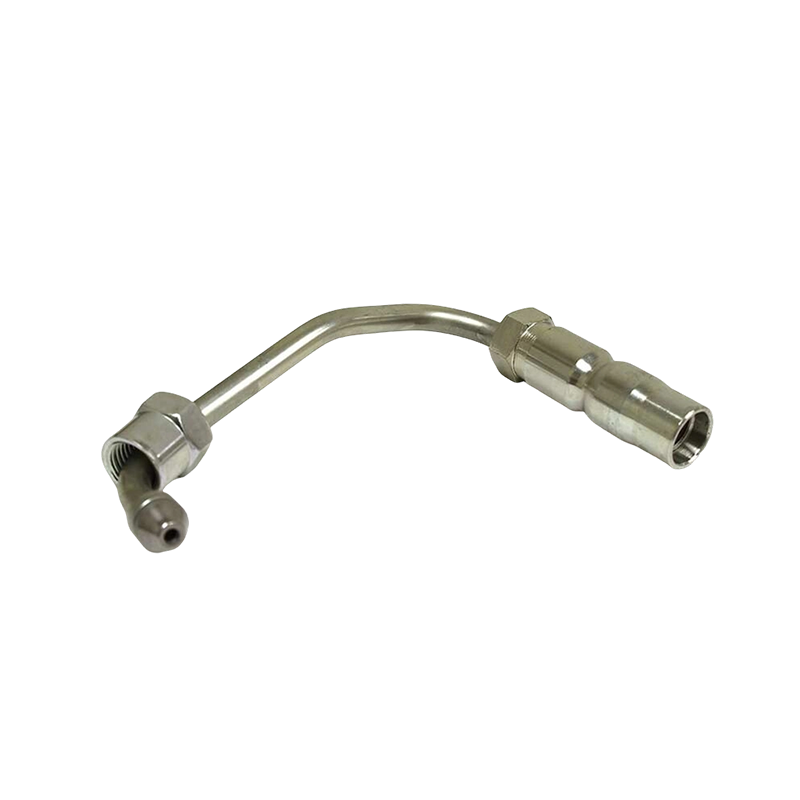 Precision High-Pressure Fuel Injector Feed PipeA cold-drawn alloy steel pipe with autoclave prestressing to resist fatigue, cleaned to ISO 4406. This card appears after guidance on line sizing, so it directly answers the need for durable high-pressure injector piping.View Product →
The chart is illustrative, but the relationship is real: at a fixed flow rate, pressure loss increases with line length, and a smaller ID makes the curve steeper.
On a vehicle, this is why a 3 ft section of 6 mm hose may work fine on a carbureted four-cylinder, while the same hose in a 6 ft run on an EFI V8 will starve the rail. If the pump, regulator, and injectors are already sized, the line should be matched to that system, not the other way around.
How to Choose the Right Fuel Line Size
Work through these steps in order:
- Identify the system: carbureted, EFI, or diesel. Check pump output and the pressure regulator setting.
- Measure the existing line before removing it completely, and mark the routing with tape so the bend points stay the same.
- Match the hose material and pressure rating (e.g., SAE J30R7 for low-pressure carbureted applications, SAE J30R9 for fuel-injection pressure) to the fluid and system pressure.
- If the original hose is missing, look up the OE part number from the vehicle parts catalog. Preformed lines already include the correct ID, bend radius, and end fittings.
- After installation, prime the system and check for a hard spot at each bend (kink) and a drip at every fitting.
An OE-fit replacement can remove five of those steps at once. Preformed assemblies such as our replacement fuel lines and injector pipes, with factory-style brackets and bend angles, are made so that size questions are answered before installation.
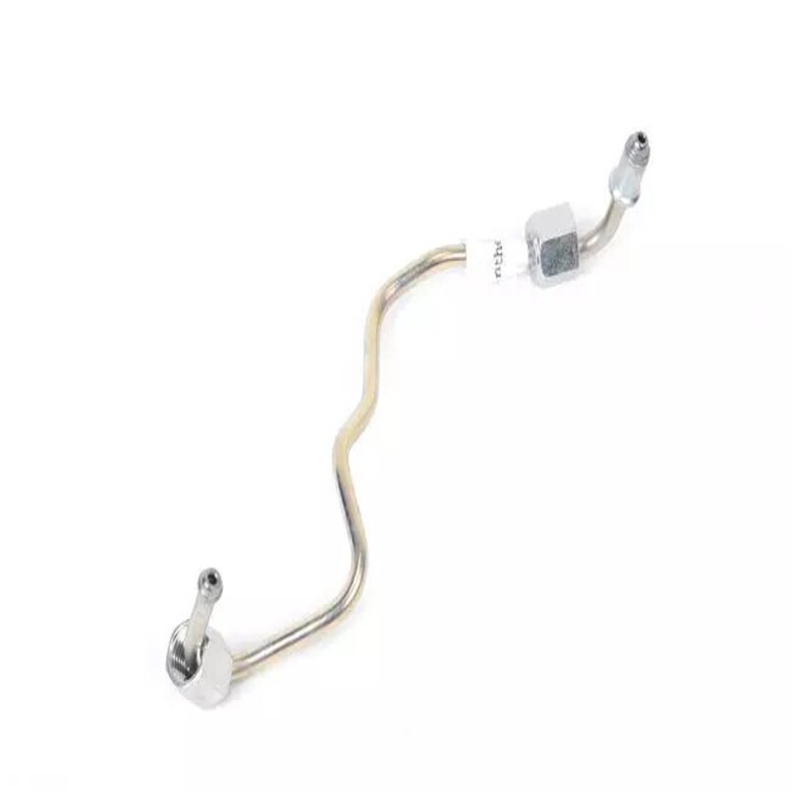 Direct-Fit Fuel Injector Line OE 98063063An exact replacement for OE 98063063 using certified CuNiFe material to prevent internal corrosion, with proper torque specs. It fits the context of preformed assemblies that eliminate sizing guesswork during installation.View Product →
A larger feed line carries fuel from tank to rail; a smaller return line routes surplus fuel back to the tank.
Fuel Line Size FAQ
What size fuel line do most cars use?
Most modern EFI cars use an 8 mm (5/16 in) feed line and a 6 mm (1/4 in) return line. Many trucks and performance vehicles step up to 10 mm (3/8 in) feed. Carbureted classics typically use 6 mm (1/4 in) to 8 mm (5/16 in).
Is 3/8-inch fuel line too big?
Not if the fittings accept it. A 3/8 in (10 mm) line supports several hundred horsepower with a matching pump and regulator. On a carbureted engine with 1/4 in barbs, however, it will not seal on the fittings and becomes a leak risk. Match the hose to the barb.
What is the difference between 5mm and 5.5mm fuel line?
Exactly 0.5 mm of inner diameter. On dual-carb air-cooled VWs and some vintage Porsches, the original pump-to-carb hose is 5.5 mm, while many replacement rolls are 5 mm. The 0.5 mm difference changes how the clamp seats on the barb and can cause seepage if mismatched.
How do I measure fuel line size?
Use a caliper to measure the inner diameter of the old hose after cutting a clean cross-section. Or measure the outside diameter of the metal barb and choose a hose with an ID equal to that reading or up to about 0.2 mm smaller.
Does fuel line size affect fuel pressure?
Yes. An undersized line causes a pressure drop at the rail or carburetor, leading to lean running and misfires. An oversized line lowers fuel velocity, which can cause vapor lock in carbureted systems and slow system priming in EFI.
Can I use push-on fuel line without clamps?
Only on systems designed for it, such as some carbureted small engines with a factory push-on spec. For rubber hose on a barb fitting, use a correctly sized clamp. Never rely on a push-on fit for EFI, diesel injector lines, or any system above about 10 psi.
Our Main Products

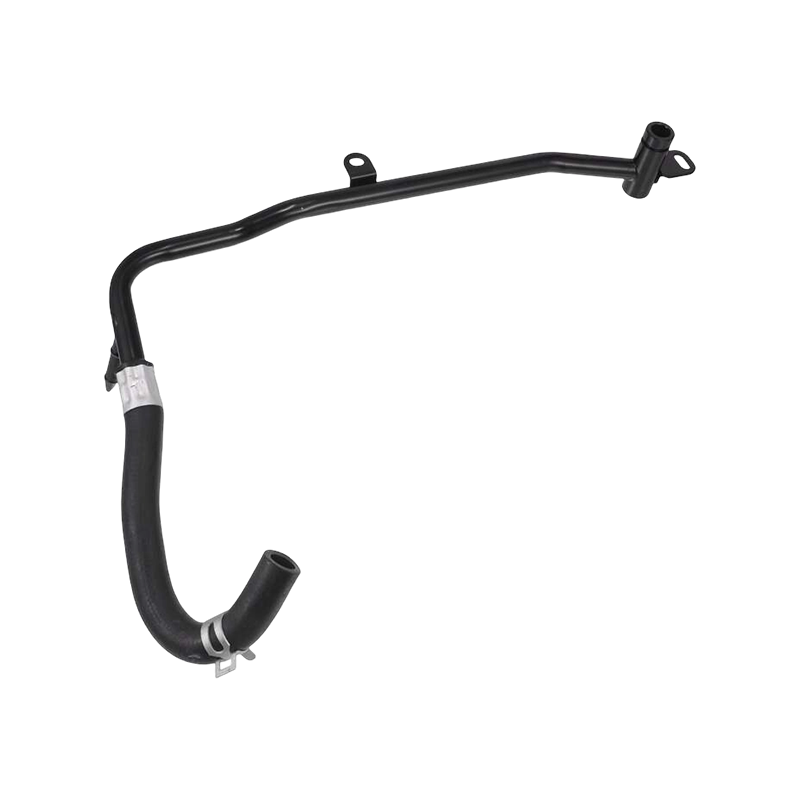
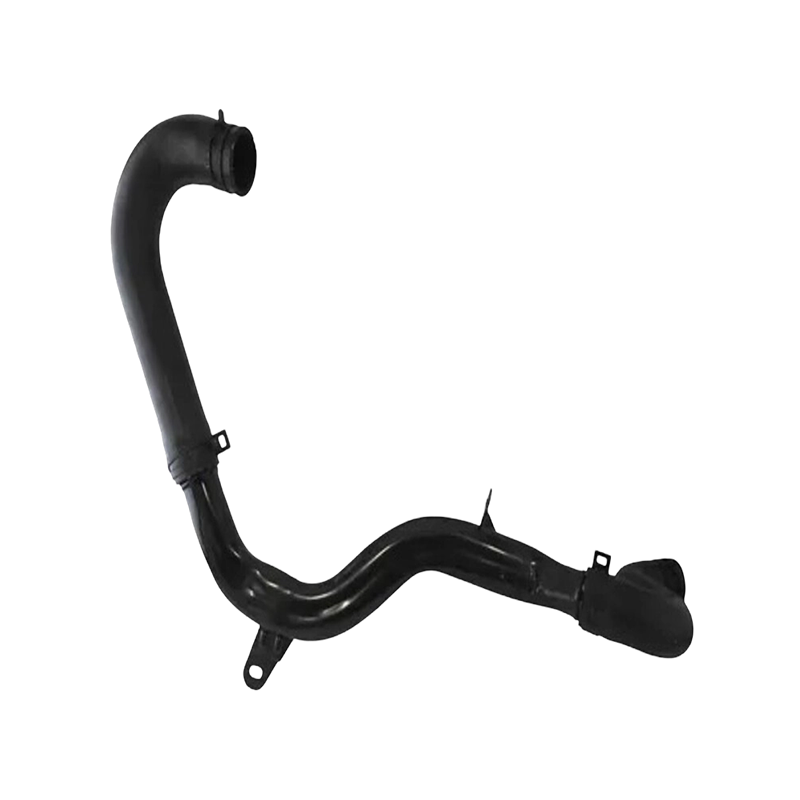
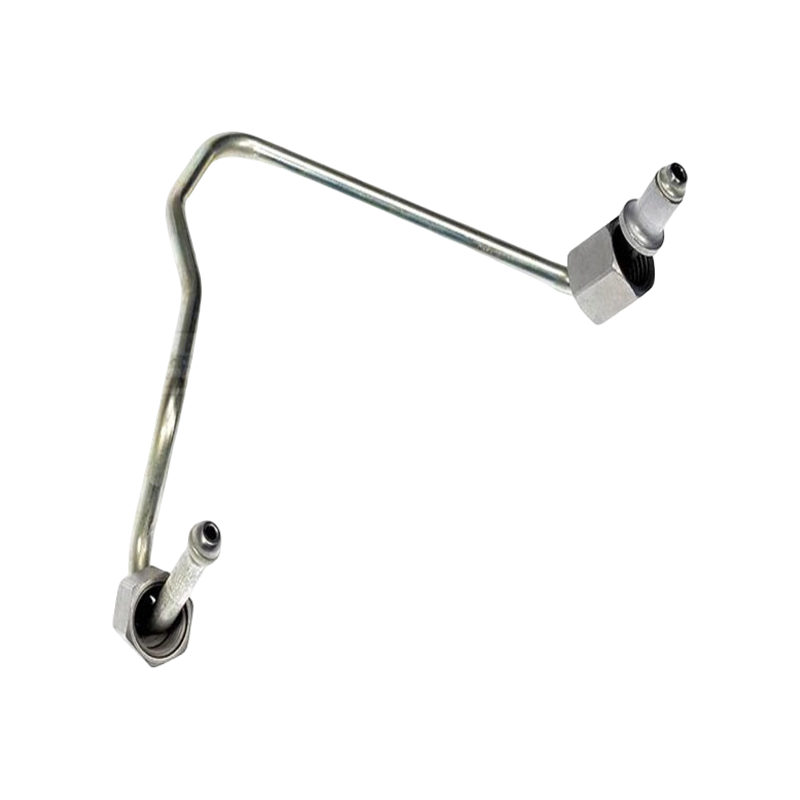

 Contact Us
+86-138 0586 3066
+86-574 8840 6311
 Products
 Send An E-mail
 Mobile
Copyright ©NINGBO JIATIAN AUTOMOBILE PIPE CO.,LTD. All Rights Reserved.
 China's Premium Automotive Tube Factory
Custom Automotive Pipe Fittings Supply
privacy
China's Premium Automotive Tube Factory
Custom Automotive Pipe Fittings Supply
privacy