

 English
 Español
Pinched Fuel Line Symptoms, Causes, and Repair Options: A Complete Guide
Content
- 1 What a Pinched Fuel Line Actually Does to the Fuel System
- 2 Symptoms That Point to a Pinched Fuel Line
- 3 Where Fuel Lines Get Pinched
- 4 How to Confirm the Diagnosis
- 5 Repair or Replace: What Actually Works
- 6 Why Diesel Injection Lines Are a Different Risk Category
- 7 Preventing Pinches During Installation and Repairs
- 8 Frequently Asked Questions About Pinched Fuel Lines
- 8.1 Q1. What are the first signs of a pinched fuel line?
- 8.2 Q2. Can I drive with a pinched fuel line?
- 8.3 Q3. Will a pinched fuel line always trigger a check engine light?
- 8.4 Q4. Can a pinched fuel line be repaired instead of replaced?
- 8.5 Q5. Can a pinched fuel line leak or cause a fire?
- 8.6 Q6. What bend radius should a replacement fuel line use?
A truck that idles cleanly, cruises smoothly, then falls flat the moment it has to pull a grade is a familiar diagnostic puzzle. The pump is new, the filter is new, the injectors were cleaned last month, and the scan tool still reports a lean bank and low fuel rail pressure. The answer is usually visible from underneath: the supply line is flattened where it passes a frame-rail clamp that was tightened a turn too far.
That flattened section is a pinched fuel line. In practice it behaves like a partial blockage that hides at low demand and shows itself only under load. The short version: a pinch restricts flow rather than stopping it, the restriction appears as lost pressure and a lean mixture, and the durable fix is to replace the affected line instead of trying to reshape it.
The sections below explain what the restriction does to the fuel system, how to confirm it with ordinary shop tools, and which details matter when you order the replacement part.
What a Pinched Fuel Line Actually Does to the Fuel System
A fuel line is sized for a volume, not only for pressure. When a section of it is crushed or kinked, the internal cross-section shrinks. At idle, the engine draws only a small fraction of the line's capacity, so nothing looks wrong. Ask for acceleration or hold a hill, demand rises, and the restricted section can no longer pass the volume the rail needs. Rail pressure falls, long-term fuel trims swing positive, and the mixture goes lean at the exact moment the engine needs fuel most.
The operating pressures involved explain why small deformations matter. Typical port fuel injection runs at roughly 40 to 60 psi, while common-rail diesel systems operate between about 1,600 and 2,500 bar depending on generation. The higher the working pressure, the less tolerance there is for a deformed wall, and the more serious the consequences of a leak.
There is a second failure mode that is easy to overlook. A kink creates a stress riser. Nylon, steel and aluminium lines do not spring back to shape, so the crease becomes the point where fatigue cracks begin, and where a clamp or shield rubs through the wall over thousands of miles. A line that started as restricted often finishes as a leaking one.
Finally, a lean mixture is not a harmless condition. Persistent lean running raises combustion temperature, which shortens spark plug life, stresses exhaust valves and can damage a catalytic converter long before the driver notices anything beyond a check engine light.
Symptoms That Point to a Pinched Fuel Line
No single symptom proves a pinch, but the pattern is usually consistent: the vehicle behaves well at light load and badly when fuel demand climbs.
- Hesitation, sag or power loss under load, often worse on a grade or when towing.
- Lean codes such as P0171 or P0174, sometimes paired with low rail pressure codes P0087 and P0089.
- Random or bank-specific misfires (P0300 series) that move with load rather than with a cylinder.
- Extended crank or hard starting after a heat soak, when fuel demand briefly exceeds what the line can supply.
- Surging at steady throttle as the pressure regulator and pump chase a pressure they cannot hold.
- Fuel odour or a damp, wet-looking patch along the line, particularly after the vehicle has been parked.
- Louder pump noise as the pump works against an artificial restriction.
| Symptom or finding | Consistent with a pinched line | Consistent with a worn pump |
|---|---|---|
| Power loss only under load, normal at idle | Yes, restriction scales with flow demand | Possible, but a tired pump often sags hot at idle too |
| Pressure drops under load and recovers at idle | Yes | Sometimes |
| Visible dent, flat spot or crease on the line | Yes | No |
| Fuel smell or damp patch at one spot | Yes | No |
| Long crank when hot | Occasionally | Common |
| Whine from the tank area | Rare | Common |
| Long-term trims climbing over weeks | Yes | Yes |
Where Fuel Lines Get Pinched
Pinches are almost never random. They cluster at points where the line is clamped, shielded or bent during other work.
- Frame rails and floor pans after a clamp, shield or skid plate has been refitted.
- Collision repair areas where a line was pulled into a new position against the body.
- The tank connection, where a sender or pump was replaced and the line was forced back into place.
- The engine bay, where a line is routed around an intake tube, an accessory bracket or a heat sleeve.
- Suspension travel zones, where the line is trapped between the floor and a control arm or placed under a jack point.
- Soft hose sections clamped at a bend tighter than roughly three times the outside diameter, where the hose collapses rather than kinks.
How to Confirm the Diagnosis
Confirmation takes about twenty minutes with a pressure gauge, a light and a scan tool.
- Walk the entire line, supply and return, with a bright light and a mirror. Look for dents, flat spots, shiny rub marks and fuel staining.
- Measure pressure at the rail or the test port key-on-engine-off, then again with the engine held under load. Compare both readings with the OEM specification.
- Run a volume test: measure the fuel delivered into a graduated container over a fixed period and compare it with the specified flow for that vehicle.
- Check for a pressure drop across the suspected section by measuring on both sides of it.
- Read live data. Long-term trims climbing under load, rail pressure falling short of the commanded value, and higher pump duty all support a restriction rather than an electrical fault.
Lean codes alone are not proof. A vacuum leak, a lazy oxygen sensor or a weak pump produces similar readings, which is why a pressure-and-volume test matters more than a code list.
Repair or Replace: What Actually Works
Straightening a kinked hard line does not restore it. The crease has already reduced the wall thickness and work-hardened the material, so the line will fail again, usually sooner than the original did. Most OEM service procedures also do not approve compression fittings on high-pressure fuel lines; the correct termination is the original flare, quick-connect or crimped OE-style end.
For soft line sections, use hose rated for fuel injection service to the SAE J30 R9 class, or R10 where ethanol blends are common. Standard low-pressure hose and worm-drive clamps are not a substitute, because a clamp that bites into the wall creates exactly the restriction you are trying to remove.
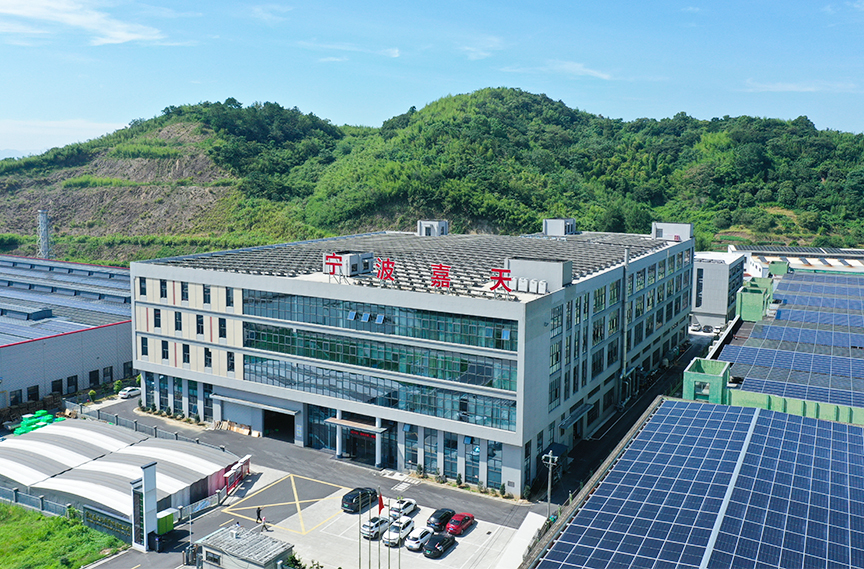 Automotive Fuel Supply Line Supplierinformation to be updatedView Product →
When you order, match the OE number rather than the visual appearance. Two lines can look identical at the ends and differ in diameter, bend geometry and fitting type, and a line that fits the routing but not the connector will leak or restrict just as badly.
Why Diesel Injection Lines Are a Different Risk Category
On a common-rail diesel, any external deformation of a high-pressure line is a fatigue site. The line may hold pressure for a while and then crack at the crease, and a pinhole leak at 1,600 bar or more releases a fine jet of fuel that can penetrate skin. High-pressure injection injuries are a documented workshop hazard, so a deformed high-pressure line is replaced, never bent back or dressed with tape.
Many manufacturers also classify the high-pressure lines and their fittings as single-use components with a specified tightening torque and a defined installation sequence. Reusing a fitting, or torquing it by feel, is a common cause of leaks after an injector job.
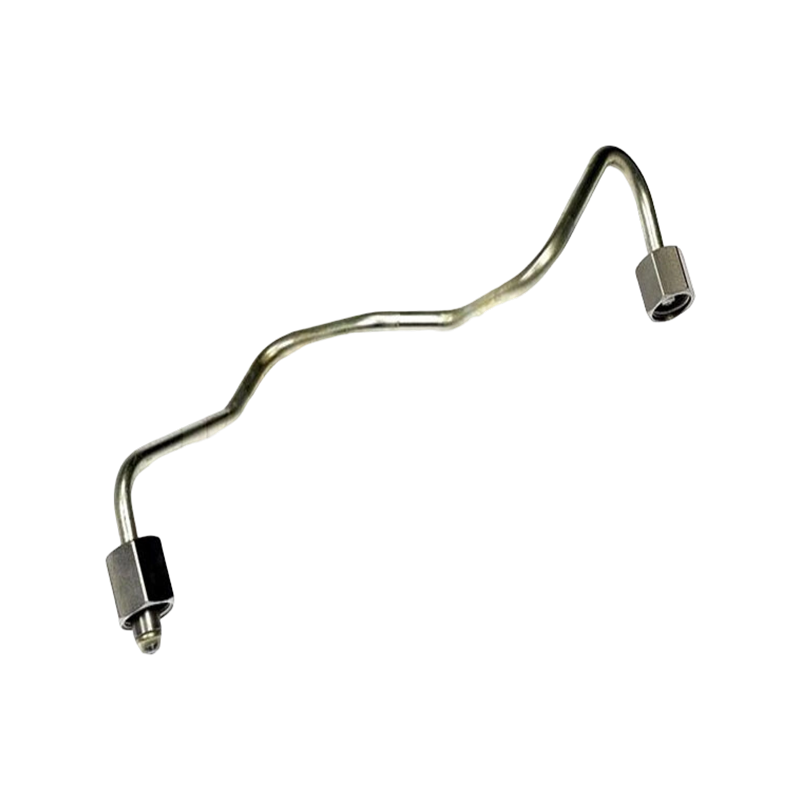
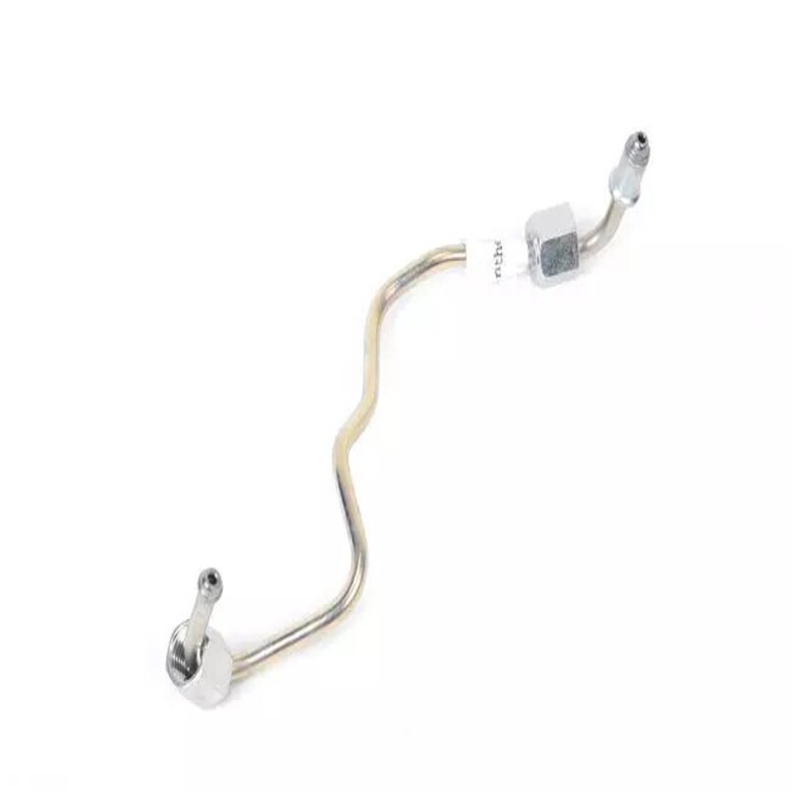 Maintain Peak Engine Performance with a Precision Fuel Injector Line (OE# 98063063)Direct-fit replacement for OE# 98063063. This high-pressure fuel injector line ensures precise diesel delivery, prevents leaks, and restores engine performance. OEM sp...View Product →
Fitment details decide whether a replacement lasts. Our guide on choosing the right fuel injector pipe for your engine walks through connector types, bend geometry and pressure ratings so the new line performs like the one it replaces.
Preventing Pinches During Installation and Repairs
- Support the line with the correct clamp and the original rubber isolator, and tighten to the specified torque rather than until it stops moving.
- Keep the bend radius at three times the outside diameter or more, and use a proper tube bender instead of pliers or a bench vice.
- Route the line clear of exhaust components, belts and suspension travel, and add a heat sleeve where radiant heat is unavoidable.
- Never place a jack or stand under a floor section where a line runs, and refit underbody shields in their original position.
- After any collision repair or tank work, re-check the full routing rather than only the connection you touched.
- Re-inspect the line after the first heat cycle and again at around 500 miles, looking for fresh rub marks or staining.
Treat a pinched fuel line as a flow problem first and an electrical problem second. Pressure and volume testing costs less than the parts thrown at a lean-code diagnosis, and it points directly at the section of line that needs to be replaced.
Frequently Asked Questions About Pinched Fuel Lines
Q1. What are the first signs of a pinched fuel line?
Usually a car that idles normally but loses power under load, paired with lean fuel trim codes and a drop in fuel pressure when demand rises. A visible dent or flat spot on the line confirms it.
Q2. Can I drive with a pinched fuel line?
Short distances at light load are usually possible, but the restriction worsens with heat and demand. Persistent lean running can damage a catalytic converter, and a creased line can start leaking, so repair should not be postponed.
Q3. Will a pinched fuel line always trigger a check engine light?
No. A mild restriction may only show up as positive long-term fuel trims. Severe pinch points normally set P0087, P0089 or lean codes such as P0171 and P0174, often with misfires under load.
Q4. Can a pinched fuel line be repaired instead of replaced?
Soft hose sections can be replaced with correctly rated fuel injection hose. Hard lines and diesel fuel injector lines should be replaced, because a crease leaves a fatigue point and compression fittings are not approved for high-pressure service.
Q5. Can a pinched fuel line leak or cause a fire?
Yes. Fuel system leaks are treated as a serious fire risk in service guidance, and a deformed high-pressure diesel line can crack at the crease. Any fuel smell or damp patch along a line should be repaired immediately.
Q6. What bend radius should a replacement fuel line use?
Aim for at least three times the tube outside diameter wherever routing allows. Tighter bends reduce flow capacity, and a radius near the diameter of the tube risks creasing the wall during installation.
Our Main Products

 Contact Us
+86-138 0586 3066
+86-574 8840 6311
 Products
 Send An E-mail
 Mobile
Copyright ©NINGBO JIATIAN AUTOMOBILE PIPE CO.,LTD. All Rights Reserved.
 China's Premium Automotive Tube Factory
Custom Automotive Pipe Fittings Supply
privacy
China's Premium Automotive Tube Factory
Custom Automotive Pipe Fittings Supply
privacy