English
 Español
Automotive Flexible Metal Tubes
-- Steady & Reliable Manufacturer --
Application
Application Scenarios
| Application | Typical Parts | Buyer Focus |
| Exhaust decoupling | Flex pipes between manifold and exhaust | Vibration isolation and gas sealing |
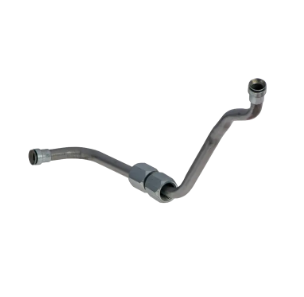
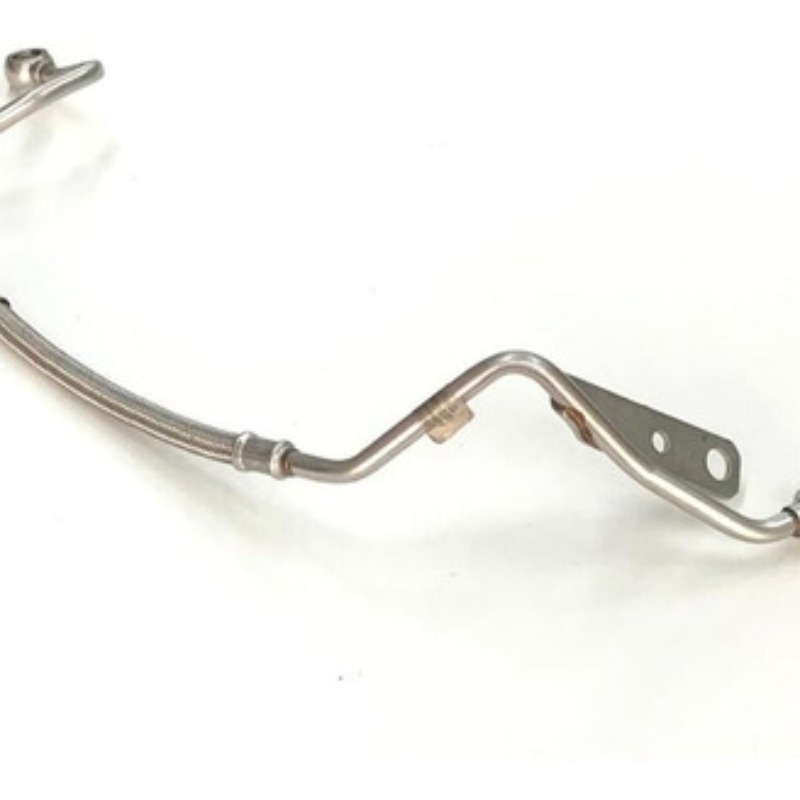
| Turbocharger connections | Flexible oil and air connections | Heat resistance and flexibility |
| EGR systems | Flexible sections in recirculation lines | Thermal cycling durability |
| Commercial and special vehicles | Heavy-duty flex lines | Strength and service life |
Target Customers
Exhaust System Makers
Need flex pipes with defined movement and stable weld quality.
Engine and Turbo Suppliers
Need hot-service flexible lines that survive thermal cycling.
Aftermarket Brands
Need replacement flex tubes made to sample with flexible quantity.
Suitable and Unsuitable Uses
Suitable Uses
- Connections that move or vibrate with the engine
- High-temperature lines where rubber hose would fail
- Systems that need a sealed, flexible joint
Unsuitable Uses
- Fixed rigid connections that do not move
- Uses that exceed the movement or pressure rating
- Installations with twisting that the design does not allow
Selection Guidance
- 1Define the movement. Give axial, lateral and angular values and how often they occur.
- 2Choose braid by load. Add braid where stretch or pressure pulses are expected.
- 3Match ends to the system. State flange, sleeve or pipe dimensions to avoid adapter parts.
- 4Select grade by environment. Use 321 or 316L where temperature or corrosion is more demanding.
Usage Notes
- Install without twisting the flexible section.
- Keep bending and extension within the rated movement.
- Avoid sharp contact between the braid and neighboring parts.
- Inspect braid and welds for wear or cracks at service intervals.
- Use the specified clamps and torque on end connections.
Advantages
- 01
Complete assembly supply
We can supply the corrugated tube, braid and welded end fittings as one assembly. A single supplier reduces coordination effort and fit problems.
- 02
Own corrugation forming
Our 800T water expansion machine forms the corrugated section in house. Controlling this step gives consistent flexibility and shortens lead time.
- 03
Weld quality at the ends
Four laser welders, four welding robots and six Panasonic arc welding machines are available for end joining. Strong, repeatable seams reduce leak risk after thermal cycling.
- 04
Metal construction for hot service
Stainless corrugated tube and braid handle heat and oil that shorten rubber hose life. Longer service life reduces warranty replacement cost.
- 05
Bending and machining support
Connected pipes can be bent and flanges machined using our bending machines and machining centers. Dimensions are controlled across the full assembly.
- 06
Sample support and testing
Samples are provided for fit and movement checks, with laboratory support for material and leak testing. Verification early in the project protects launch timing.
Frequently Asked Questions
- Q: What is the difference between a flexible metal tube and a bellows?
- A: They are closely related. A bellows is the corrugated tube itself, while a flexible metal tube often adds an outer braid and welded end fittings to form a complete flexible connection.
- Q: Do I need a braided flexible tube?
- A: A braid is recommended when the tube must resist stretching or pressure pulses. For small movement and lower loads, bare corrugated tube can be enough. We recommend based on your duty.
- Q: What temperature can the tube withstand?
- A: It depends on the stainless grade and the gas or fluid. Grades such as 321 and 316L are used for higher temperature or more corrosive service. Please give us your maximum temperature.
- Q: Can you attach flanges or special end fittings?
- A: Yes. Flanges, sleeves, pipes and nuts can be welded or brazed to the flexible tube, and we machine parts such as flanges in house.
- Q: What is the MOQ for flexible metal tubes?
- A: The MOQ typically starts from around 300 pieces. Smaller pilot lots can be discussed for new designs.
- Q: How long does a sample take?
- A: Samples usually take 15 to 30 days after the drawing is confirmed. New forming tools or special end fittings can extend this.
- Q: Do you test for leaks?
- A: Yes. Leak tests are carried out according to your drawing requirement, and the method and acceptance limit are agreed before volume production.
- Q: How should the flexible tube be installed?
- A: Install it without twisting and keep movement within the rated range. Use the specified clamps and make sure the flexible section is aligned with the connection points.
Contact us to learn more
Send your movement, temperature and connection details, and we will propose a flexible metal tube design.
Contact Us
+86-138 0586 3066
+86-574 8840 6311